Have you ever walked into a supermarket intending to buy a gallon of milk, only to walk out with a cart full of items and a $50 receipt? You aren’t alone, and it isn’t a lack of willpower.
Grocery stores are meticulously designed landscapes engineered by retail psychologists. Every aisle, smell, and shelf placement is a calculated attempt to make you spend more money. Here are the five sneakiest layout tricks supermarkets use—and how to outsmart them.
Quick Summary: Supermarket Traps At-A-Glance
| The Trick | How It Works | How to Beat It |
| The Inconvenient Milk Placement | Dairy and essentials are placed at the very back of the store. | Walk directly to the back with blinders on; ignore side displays. |
| The Eye-Level Buy Zone | Name brands and expensive items sit exactly at eye level. | Look up and down; cheaper store brands are hidden on bottom shelves. |
| Sensory Overload at the Door | Fresh flowers and bakeries are placed right at the entrance. | Eat a snack before shopping so smells don’t trigger impulse buys. |
| The “Endcap” Illusion | Displays at the ends of aisles mimic major discount sales. | Check the inner aisles; endcaps are often full-price items. |
| The Shrinking Checkout | Narrow checkout lanes trap you with candy and single-serve drinks. | Keep your eyes on your phone or a magazine while waiting. |
1. Why Is the Milk Always in the Very Back?
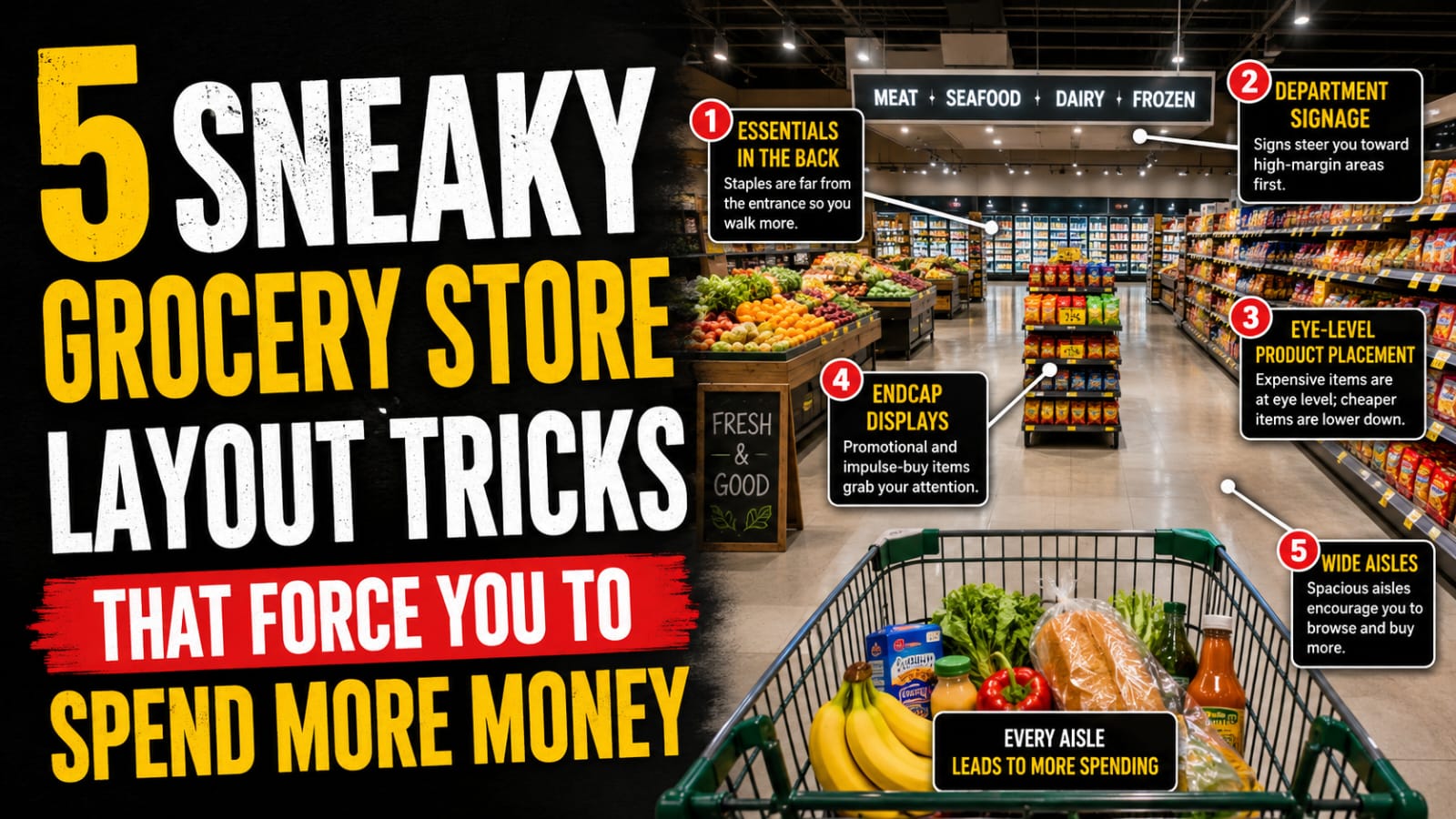
It is the oldest trick in the retail playbook. Think about your local supermarket: the dairy section, eggs, and fresh meats are almost always located at the absolute back of the store, farthest from the entrance.
There is a simple reason for this layout. Grocery stores know that milk and eggs are the most common repeat purchases. By forcing you to walk through the entire length of the store just to grab a carton of milk, they expose you to hundreds of tempting products along the way. The more items you pass, the higher the statistical chance you will drop an impulse buy into your cart.

2. The Deceptive “Eye-Level” Buy Zone
When you scan a grocery aisle, your eyes naturally lock onto the shelves that sit directly at your eye level. Retailers refer to this prime real estate as the “bullseye zone.”
Supermarkets charge food manufacturers premium fees to place items on these shelves. Consequently, you will always find the most expensive name brands sitting right at eye level. If you want to find the budget-friendly options, generic store brands, or bulk items, you have to actively train yourself to look at the top and bottom shelves.
3. The Front-Door Sensory Trap
The moment you step through the automatic doors of a grocery store, you are usually greeted by the vibrant colors of fresh flowers and the intoxicating smell of fresh-baked bread or rotisserie chicken. This is not a coincidence.
Triggering your sense of smell activates your salivary glands, which instantly makes you hungry—even if you just ate. A hungry shopper is a reckless shopper. Furthermore, starting your trip with beautiful, fresh produce or flowers creates a psychological “halo effect,” making the rest of the supermarket feel wholesome and fresh.
4. The Illusion of the “Endcap” Sale
The displays built at the very ends of the grocery aisles are called endcaps. Because they stand out and are decorated with large, bright signs, consumers automatically assume the items featured on them are on a massive clearance sale.
In reality, companies pay a fortune to secure endcap space just to increase visibility. While some items might be discounted, many endcaps feature regular-priced goods, seasonal items, or high-profit items paired together (like tortilla chips placed right next to expensive jars of salsa). Always check the actual aisle to compare prices before grabbing from an endcap.
5. The Maze of the Shrinking Checkout Lane
Have you ever noticed that checkout lanes have become incredibly narrow? This is a deliberate design choice meant to trap you.
When you are standing in line waiting for the person ahead of you to pay, you are a captive audience. The lanes are restricted so you cannot easily turn your cart around, forcing you to stare directly at rows of single-serve sodas, candy bars, magazines, and gift cards. Because your mental energy is drained after a long shopping trip, your defense mechanisms are down, making it the perfect moment for an impulse buy.

Your Actionable Anti-Supermarket Checklist
To keep your hard-earned cash in your wallet, take these steps during your next grocery run:
- Never shop without a written list: If it isn’t on the paper, do not put it in the cart.
- Use a smaller basket: If you only need a few items, skip the giant shopping cart. A large, empty cart psychologically makes you want to fill it.
- Listen to your own music: Supermarkets play slow, rhythmic background music because studies show it unconsciously forces shoppers to walk slower and spend more time in the aisles. Put in your headphones and play upbeat music to speed up your trip.
- Check the unit price: Don’t just look at the total cost on the shelf tag. Look at the tiny text that shows the price per ounce or per pound to find the true deal.
The Bottom Line
Grocery stores are designed to separate you from your money, but awareness is your best defense. By knowing exactly where the traps are hidden, you can navigate the aisles efficiently, stick to your budget, and beat the supermarket at its own game.