
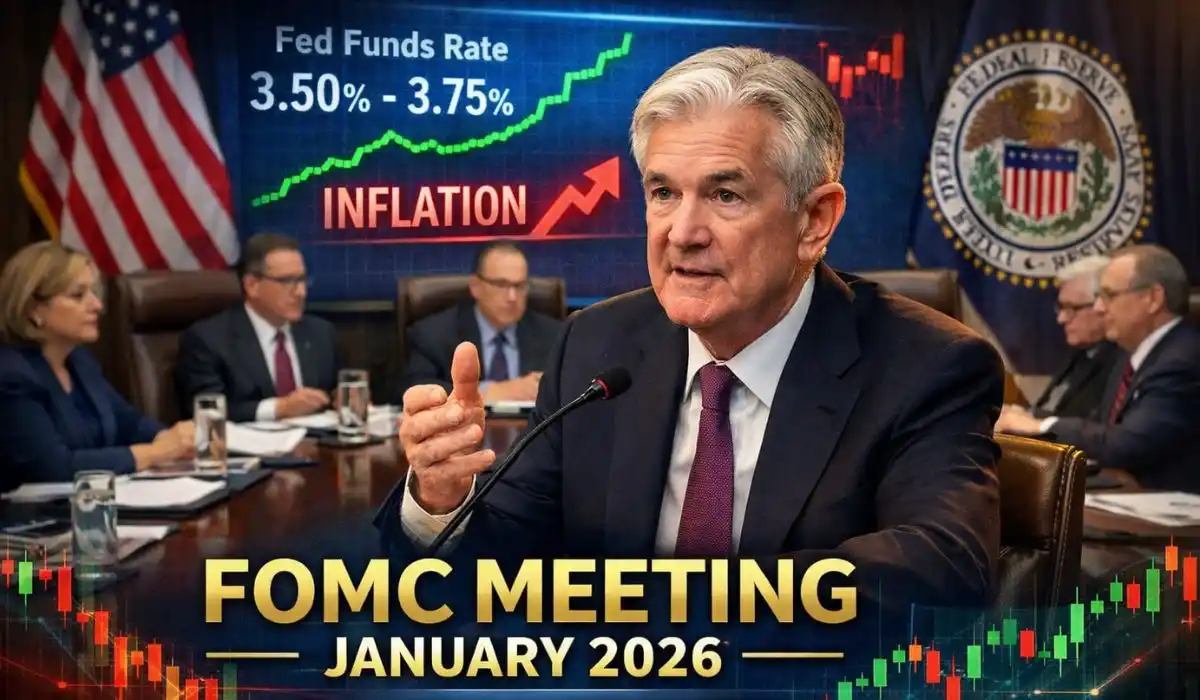
WASHINGTON, D.C. — The Federal Open Market Committee (FOMC) of the U.S. Federal Reserve concluded its first major monetary policy meeting of 2026 on January 28, reaffirming its cautious approach to the U.S. economy amid persistent inflation pressures, mixed labor market signals, and intensifying political scrutiny.
The two‑day meeting — held January 27–28 — is the first of eight scheduled FOMC sessions this year and is pivotal for setting the tone of U.S. monetary policy.
Key Policy Decision: Rates Held Steady
In a widely anticipated move, the FOMC kept the federal funds rate unchanged, maintaining the target range at 3.50 % to 3.75 %. This pause followed a series of three rate cuts in 2025, when policymakers sought to support economic growth amid cooling inflation.
Federal Reserve Chair Jerome Powell emphasized that the committee will remain data‑dependent, balancing the dual mandate of price stability and maximum employment while closely watching inflation trends and labor market developments.

Economic Context and Rationale
Officials cited resilient economic activity and ongoing inflation above the Fed’s 2 % target as central reasons for the decision to hold rates. Recent data indicate that inflation — measured by core personal consumption expenditures — remains above target, even as job gains have softened.
The committee’s cautious stance reflects a broader strategy of monetary patience: encouraging growth while avoiding premature tightening that could stifle employment, yet also preventing inflation from re‑accelerating. This strategy aligns with projections suggesting only limited rate cuts later in 2026, if at all.
Political and Institutional Pressures
The FOMC’s decision comes amid unusual political scrutiny. President Donald Trump has publicly pressed for deeper rate cuts, arguing lower borrowing costs would stimulate markets and ease the federal debt burden. Trump also signaled plans to announce a new Fed Chair ahead of Powell’s term expiry in May 2026, pushing for leadership changes that might accelerate monetary easing.
In addition, Powell faces legal challenges arising from a federal investigation related to renovation expenditures at the Fed headquarters — an inquiry that has intensified political tensions over the central bank’s independence.

Despite this pressure, most policymakers have reaffirmed the Fed’s independence, insisting decisions remain grounded in economic analysis rather than political influence.
Market Reaction and Forward Guidance
Financial markets largely priced in the decision ahead of the announcement, with traders expecting no immediate change to policy. Expectations for rate cuts later in 2026 vary across institutions: some major banks project the first cut by mid‑year, while others argue the Fed may hold rates steady for an extended period given persistent inflation.
In his post‑meeting press conference, Chair Powell stressed the committee’s commitment to flexibility, noting that future actions will hinge on economic data and risks — both domestic and global.
What Comes Next
Looking ahead, the FOMC will meet again in March (17‑18) and later throughout the year, with several meetings likely to include a Summary of Economic Projections (SEP) outlining policymakers’ views on growth, inflation, and the path of interest rates.

Analysts expect continued close scrutiny of data on inflation, employment, and consumer spending — key indicators that will shape future rate decisions and influence both U.S. and global financial markets in the months ahead.