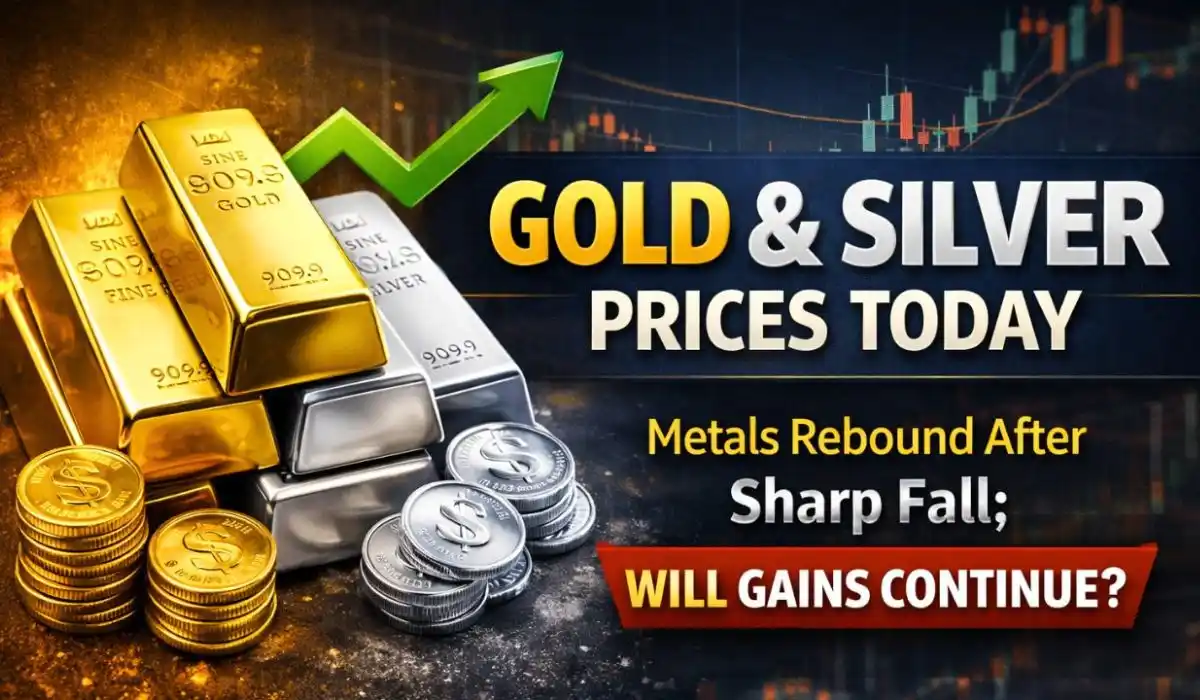
Gold and silver have once again moved into the spotlight in early 2026 as prices rebound after a sharp correction phase. The precious metals market has experienced strong volatility over the past few weeks, driven by global economic uncertainty, currency movements, and changing expectations around interest rates. Investors across India and global markets are closely tracking bullion prices, trying to understand whether this rebound is temporary or the beginning of another long-term rally.
As of early February 2026, gold prices in India are trading near historic highs, while silver continues to show strong but volatile recovery patterns. The recent price rebound suggests strong demand from both institutional and retail investors. Market participants are increasingly treating gold as a stability asset and silver as a high-growth but higher-risk metal.
Today’s Gold and Silver Prices in India (February 2026)
Current Average Retail Prices
Across India’s bullion market, approximate retail prices are:
- 24K Gold: Around ₹1,56,500 – ₹1,58,000 per 10 grams
- 22K Gold: Around ₹1,43,000 – ₹1,44,500 per 10 grams
- 18K Gold: Around ₹1,17,000 – ₹1,18,000 per 10 grams
- Silver: Around ₹2,80,000 – ₹2,90,000 per kg
These prices typically track global bullion trends, currency movements, and MCX futures performance. Local jeweller pricing may vary slightly based on taxes, logistics, and making charges.
Gold has shown strong stability despite recent corrections, while silver continues to move in sharper price swings due to its dual role as an industrial and investment metal.
India City-Wise Gold Rates (Approx Retail)
| City | 24K | 22K | 18K |
|---|---|---|---|
| Mumbai | ~1,56,500 | ~1,43,500 | ~1,17,400 |
| Delhi | ~1,56,700 | ~1,43,600 | ~1,17,500 |
| Chennai | ~1,57,000+ | ~1,44,000+ | ~1,18,000+ |
| Bengaluru | ~1,56,500 | ~1,43,500 | ~1,17,400 |
| Hyderabad | ~1,56,500 | ~1,43,500 | ~1,17,400 |
| Kolkata | ~1,56,500 | ~1,43,500 | ~1,17,400 |
Price differences across cities are usually minor and influenced by local demand, transport cost, and state taxes.
India City-Wise Silver Rates
Silver prices are usually uniform across major Indian cities due to centralized wholesale distribution.
| Quantity | Approx Price |
|---|---|
| 10 grams | ~₹2,800 – ₹2,900 |
| 100 grams | ~₹28,000 – ₹29,000 |
| 1 kg | ~₹2,80,000 – ₹2,90,000 |
Silver tends to show sharper daily price fluctuations compared to gold.

Why Gold and Silver Prices Rebounded
1. Weak Global Currency Environment
Precious metals typically rise when major currencies weaken. When the US dollar loses strength, gold and silver become cheaper for global buyers, increasing demand and pushing prices higher.
2. Safe Haven Demand
Gold especially benefits from geopolitical tensions, global economic slowdown fears, and financial market uncertainty. Investors move funds into precious metals during unstable periods.
3. Strong Dip Buying After Correction
After recent declines, long-term investors stepped in aggressively to buy metals at lower levels. This buying support helped trigger the recent rebound.
4. Industrial Demand Supporting Silver
Silver demand continues to rise due to usage in:

- Solar panels
- Electric vehicles
- Electronics manufacturing
- Semiconductor production
This industrial demand creates structural long-term support for silver prices.
Gold Price Prediction for 2026
Gold is expected to remain volatile but slightly bullish in the short term due to:
- Possible global interest rate cuts
- Continued central bank gold accumulation
- Geopolitical tensions
- Strong retail investor demand
Short-term price corrections may still happen, but strong support levels are forming.
Long-Term Gold Forecast (End of 2026)
Industry forecasts and macro models suggest:
- Global Gold Range: $6,000 – $6,700 per ounce
- High Risk Scenario: Possible move toward $7,000 per ounce
- India Gold Range: ₹1,75,000 – ₹1,95,000 per 10 grams
Key drivers include global economic slowdown risks, inflation protection demand, and central bank reserve diversification.
Silver Price Prediction for 2026
Silver is expected to outperform gold during strong industrial growth cycles but remain more volatile.
Global Silver Forecast
- Expected Range: $170 – $220 per ounce
India Silver Forecast
- Expected Range: ₹3.8 lakh – ₹4.6 lakh per kg
Silver price upside depends heavily on clean energy adoption and global industrial demand growth.
Gold vs Silver in 2026: Which Is Better?
| Factor | Gold | Silver |
|---|---|---|
| Stability | Very High | Medium |
| Volatility | Low | High |
| Safe Haven Strength | Strong | Moderate |
| Growth Potential | Moderate | High |
Gold is typically preferred for wealth protection, while silver attracts growth-focused investors.
Is Now a Good Time to Buy Gold or Silver?
1. Recent Price Correction
Recent corrections created entry opportunities for long-term investors.
2. Strong Long-Term Demand
Demand from central banks, ETFs, and retail investors remains strong.
3. Inflation Protection
Precious metals remain popular long-term inflation hedges.
Risks to Watch Before Buying
1. Prices Are Already Near Record Highs
Buying at peaks may reduce short-term returns.
2. Interest Rate Uncertainty
Higher interest rates can pressure metal prices.
3. Silver Volatility
Silver can fall or rise sharply within short periods.
Smart Investment Strategy for 2026
Conservative Investors
- Focus: Gold
- Strategy: Monthly staggered buying
- Goal: Capital protection
Moderate Investors
- Portfolio Mix: 70% Gold + 30% Silver
Aggressive Investors
- Portfolio Mix: 50% Gold + 50% Silver
- Goal: Higher long-term growth potential
Key Long-Term Drivers for Precious Metals
1. Central Bank Gold Buying
Many countries continue increasing gold reserves to reduce currency dependency.
2. Green Energy Revolution
Silver demand is rising due to solar energy expansion and EV adoption.
3. Global Economic Uncertainty
Precious metals continue to act as crisis protection assets.
Final Conclusion
Gold and silver markets in 2026 are entering a strong but volatile phase. While short-term price swings are likely, long-term fundamentals remain strong for both metals. Gold is expected to remain the preferred safe-haven asset, while silver may deliver stronger percentage returns during industrial growth cycles.
For most investors, a staggered buying approach during price dips is considered safer than lump-sum investing. Diversifying between gold and silver can help balance stability and growth potential.
The long-term outlook for precious metals remains positive, but investors should remain cautious about short-term volatility and macroeconomic shifts.