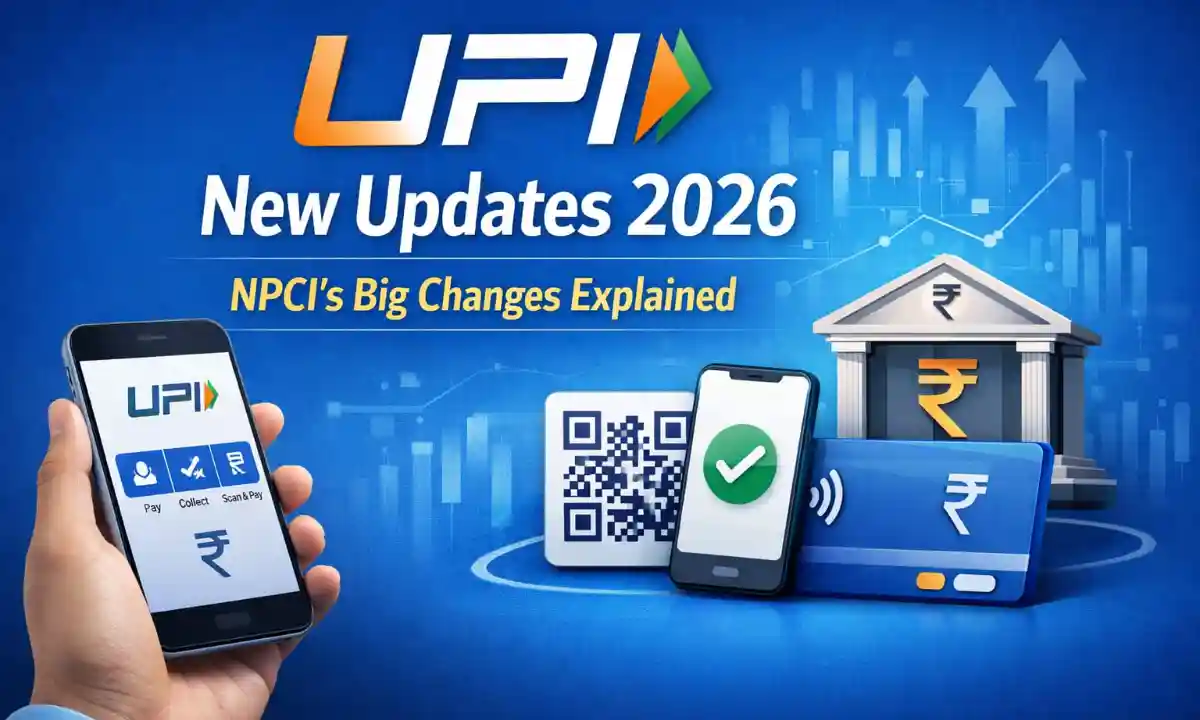
India’s Unified Payments Interface (UPI) continues to reshape how millions pay, send money, and shop online. In 2026, the National Payments Corporation of India (NPCI) has rolled out major updates to make UPI faster, safer, and more flexible than ever.
Whether you’re paying bills, receiving money, or using UPI for business, these changes affect you directly. Here’s a clear breakdown of what’s new and why it matters.
Unified UPI Accounts Across Devices
UPI in 2026 now supports linked UPI profiles across multiple devices tied to one phone number or Aadhaar.
Earlier, changing phones meant re-linking accounts and bank apps. Now, your UPI setup stays consistent across devices, making transitions smoother and reducing setup headaches.

What this means for users:
✔ Seamless device switching
✔ Faster setup on new phones
✔ Consistent UPI ID across devices
This update improves convenience and reduces friction for frequent users.
Biometric & Face Authentication for Large Transactions
To curb fraud and unauthorized spending, NPCI has enabled biometric or face authentication for high-value UPI transactions beyond a certain limit.
Instead of only using PINs or OTPs, your device’s secure biometric sensor (fingerprint/face) becomes part of the approval process.

Benefits:
✔ Stronger fraud prevention
✔ Better identity verification
✔ Faster authorization once set up
This is especially helpful for users making business transactions or recurring high-value payments.
UPI for Business Gets New Features
UPI 2026 introduces enhancements for merchants and SMEs:
- Smart QR Codes that automatically itemize bills
- Bulk payouts for payroll and vendor payments
- Invoice-linked payments for seamless reconciliation
Why this matters:
More efficient billing and better cash-flow tracking for small businesses.

These upgrades push UPI further beyond person-to-person payments into everyday commerce.
Extended UPI Credit Integration
UPI recently expanded partnerships with lenders to embed credit options directly within the UPI interface.
Now you can:
✔ Choose from multiple credit offers before checkout
✔ Pay with “Buy Now, Pay Later” options seamlessly
✔ Complete credit acceptance without leaving the UPI screen
This makes UPI a one-stop solution for payments and instant short-term credit.
Faster Settlement Windows for Merchants
To help small merchants maintain better liquidity, NPCI has introduced faster settlement cycles for UPI transactions.
Instead of waiting multiple days for funds to hit their bank accounts, eligible merchants can receive settlements within hours — boosting working capital.
UPI Lite Gets Expansion
UPI Lite — the offline, low-value payment version — is now accepted at even more outlets, including parking machines, vending kiosks, and public transport terminals in select cities.
Low-value tap-to-pay transactions have never been easier or more widespread.
Merchant Risk Scoring & Limits
NPCI has introduced a risk scoring system for merchants. High-risk indicators may lead to additional checks for certain transactions, improving safety across the ecosystem.
This means:
✔ Better protection from fraudulent merchants
✔ Fewer disputes for genuine customers
✔ Faster acceptance for vetted vendors
Key Benefits for Everyday Users
Here’s what all these changes mean for you in practical terms:
For Individuals:
✔ Faster payments, fewer interruptions
✔ Stronger security with biometrics and face ID
✔ Easier device switching
For Businesses:
✔ Bulk payouts and smart QR bills
✔ Faster settlements
✔ Better credit availability via UPI
What You Should Do Now
✔ Update your UPI app to the latest version
✔ Enable biometric authentication for large payments
✔ Check if your bank supports UPI credit options
✔ Ask merchants about smart QR acceptance
Staying updated ensures you get the best experience and benefits from the latest features.
Final Takeaway
UPI’s 2026 upgrades aren’t just tweaks — they represent a shift toward deeper payment integration, stronger security, and broader use in commerce and credit. Whether you’re an everyday user, a gig worker, or an SME owner, these changes make digital payments smarter and more efficient.