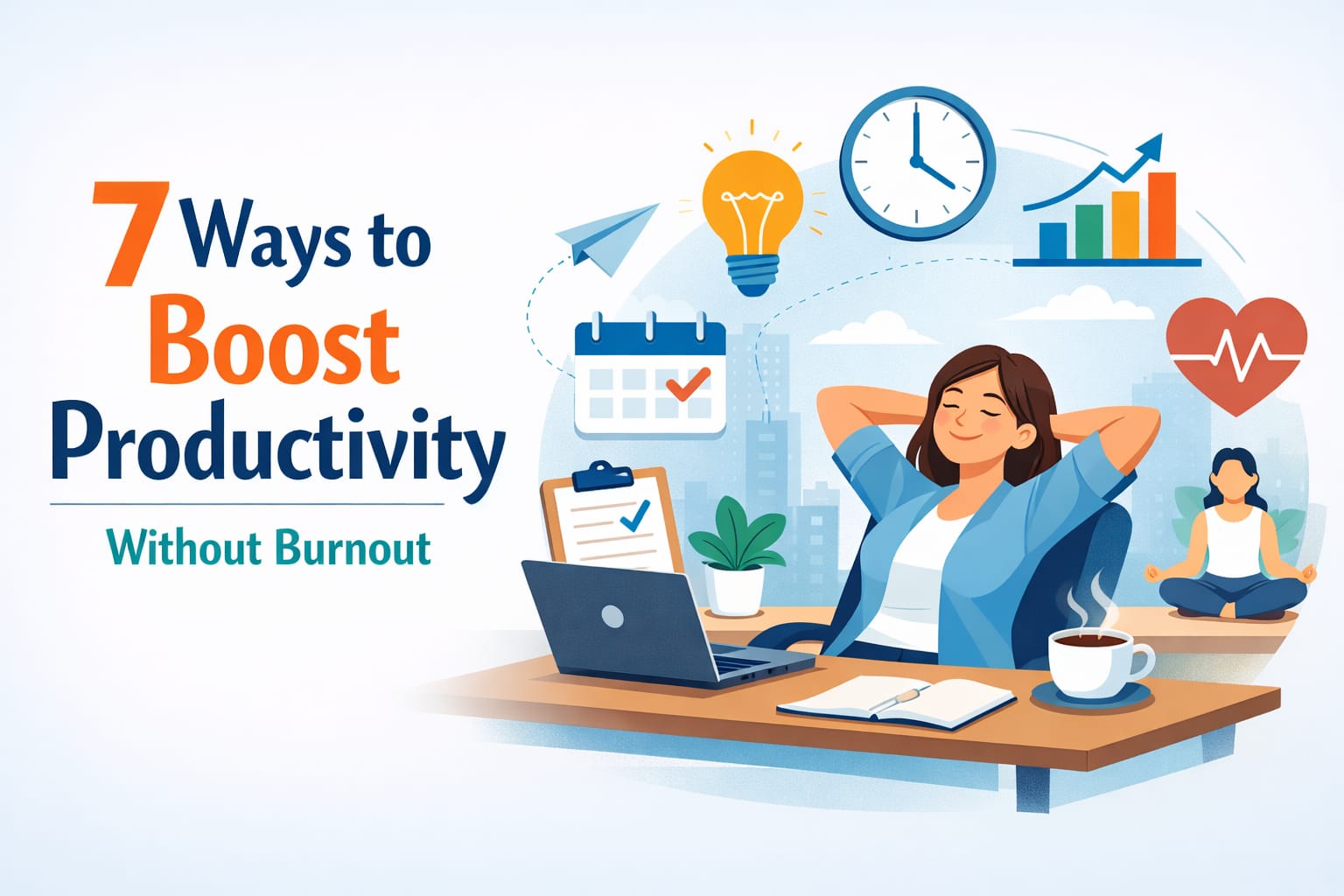
In an era of “always-on” digital demands, the secret to true success isn’t working harder—it’s working smarter. Balancing high-level output with mental health is a mechanical necessity for long-term growth. This article breaks down seven proven, high-impact strategies to help you dominate your to-do list while staying energized.
The Science of Sustainable Output
Productivity is often misunderstood as a marathon of constant movement. However, cognitive science suggests that the human brain operates best in pulses. Pushing through exhaustion doesn’t just lower the quality of your work; it actively damages your ability to perform complex tasks later. By shifting from a “grind” mindset to an “energy management” mindset, you can achieve more in less time.
Leveraging Biological Peak Time
Every individual has a unique circadian rhythm that dictates when their brain is most “wired” for complex problem-solving. Protecting this window is the most effective way to boost efficiency.

| Component | Strategy | Expected Outcome |
| Identification | Track energy levels for 3 days. | Find your 2-3 hour “Goldilocks” zone. |
| Protection | Block notifications and meetings. | 2x increase in deep work capacity. |
| Task Alignment | Save “shallow” tasks for low energy. | Reduced mental friction and fatigue. |
The Rule of 3 & Prioritization
Overwhelming to-do lists are a primary driver of workplace anxiety. When everything is a priority, nothing is. The Rule of 3 creates a “completion ritual” that satisfies the brain’s need for closure.
- Select: Choose three “Must-Win” tasks every morning.
- Focus: Do not move to secondary tasks until these are finished.
- Close: Once the three are done, allow yourself to feel “finished” for the day.
Strategic Recovery: Productive Flânerie
The “Default Mode Network” (DMN) of the brain is responsible for creative breakthroughs, but it only activates when you aren’t focused on a specific task. Constant digital stimulation keeps the DMN suppressed.
| Activity Type | Description | Frequency |
| Micro-Breaks | 5 mins of staring out a window. | Every 60 minutes. |
| Non-Input Walks | Walking without music or podcasts. | Daily (15–20 mins). |
| Tech Blackouts | Putting the phone in another room. | During deep work blocks. |
Time Boxing vs. Passive Lists
A list is a wish; a calendar is a plan. Time boxing forces you to confront the reality of how many hours you actually have, preventing the “planning fallacy” where we overestimate our capacity.

The Power of Transition Rituals
For those managing digital projects or working remotely, the lack of a “commute” often means the brain stays in work mode 24/7. This leads to chronic stress and sleep disruption. Creating a sensory boundary—like a specific scent, a closing-tabs ritual, or a physical change of clothes—signals the nervous system to shift from “fight-or-flight” (work) to “rest-and-digest” (home).
Flow States and Interval Training
Multitasking is a cognitive tax. Every time you switch from an email to a report, you lose “switching cost” energy. Using intervals allows you to stay in “Flow” while ensuring your brain gets regular oxygenation and rest.

| Method | Work Duration | Break Duration | Best For |
| Pomodoro | 25 Minutes | 5 Minutes | Admin / High-volume tasks |
| 90-Minute Sprint | 90 Minutes | 20 Minutes | Deep creative / Technical work |
| Flowtime | Until focus breaks | 10-15 Minutes | Complex problem solving |
Overcoming the Perfectionism Trap
Perfectionism is often procrastination in a fancy suit. The “80/20 Rule” (Pareto Principle) suggests that 80% of your value comes from 20% of your effort. Learning to identify the “Functional Quality” threshold allows you to ship projects faster and move on to the next growth opportunity without getting bogged down in diminishing returns.
Conclusion
Sustainable productivity is a skill that requires discipline and self-awareness. By implementing these seven strategies, you can optimize your professional output while safeguarding your mental health. Start small by protecting your peak energy hours today, and watch your efficiency scale naturally. You deserve success without the cost of burnout.