
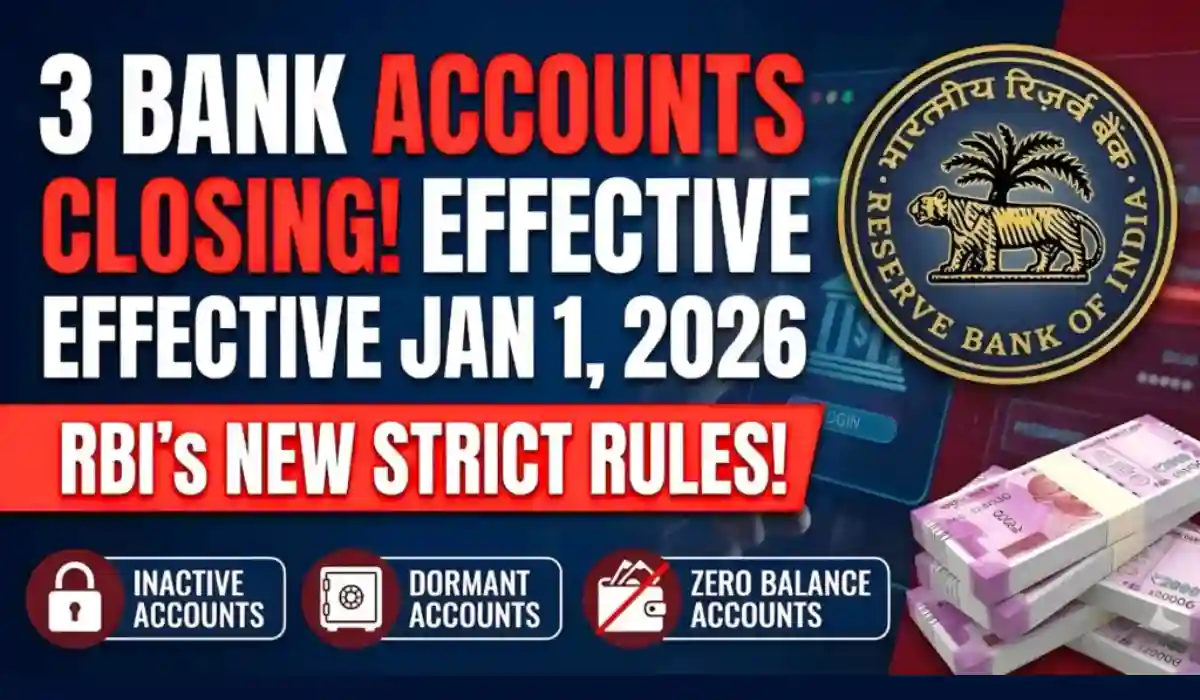
RBI New Norms 2026: Imagine opening your bank application on the morning of January 1 and suddenly finding that your bank account is no longer accessible. It may sound extreme, but from January 1, 2026, the Reserve Bank of India (RBI) has given banks the authority to close certain categories of accounts that are no longer useful or that may pose security risks. This step has been taken to protect customers from fraud and to strengthen the overall safety and transparency of India’s banking system. However, if customers are unaware of these changes, they may face unexpected inconvenience or temporary loss of access to banking services.
Dormant Accounts Under Watch
One of the most significant changes under the new RBI norms involves dormant bank accounts. These are accounts in which no deposit, withdrawal, or customer-initiated transaction has taken place for two years or more. Such accounts are often ignored by account holders, making them vulnerable to misuse, unauthorized access, or fraudulent activity. To reduce these risks, RBI has directed banks to closely monitor dormant accounts and initiate closure if the customer does not take steps to reactivate them within the given timeframe.
Reactivating a dormant account is not complicated. Even a single financial transaction, such as a small deposit, withdrawal, or digital payment, is enough to change the account’s status from dormant to active. This simple step helps customers retain access while also ensuring better security for the banking system.
Inactive Accounts at Risk
Apart from dormant accounts, inactive accounts are also under scrutiny. These accounts differ slightly, as they may have been used earlier but have seen no customer-initiated transactions for around twelve months or more. RBI considers inactive accounts to be potential risk points, as they can be misused without the customer’s immediate knowledge.
Under the new rules, banks can close inactive accounts if there is no response or activity from the account holder. However, customers can easily prevent this by carrying out a basic transaction or updating their personal and account-related details, which signals continued ownership and usage of the account.
Zero Balance Accounts Included Too
The new norms also apply to zero balance accounts that have remained unused for a long period. Many such accounts are opened for specific purposes, such as receiving benefits or completing short-term requirements, and are later forgotten. Over time, these unused accounts add to operational complexity and increase security risks.
RBI’s intention is not to penalize customers but to reduce the number of unused and unnecessary accounts within the banking system. By closing long-unused zero balance accounts, banks can maintain cleaner records while ensuring stronger monitoring and control.
Reason Behind the Big Cleanup
The main reason behind this large-scale cleanup is security and risk management. Dormant, inactive, and long-unused accounts are often targeted for fraud, identity misuse, and money laundering activities. Since customers rarely monitor these accounts, unauthorized activity can go unnoticed for long periods.
By allowing banks to close such accounts after due notice, RBI aims to improve compliance, enhance transparency, and create a safer banking environment for both customers and financial institutions.
What Happens Before Closure
Banks are not permitted to close accounts without informing customers in advance. Before any closure action is taken, banks must send notifications through SMS, email, or physical letters, giving account holders enough time to respond and take corrective action.
This makes it extremely important for customers to keep their mobile numbers, email addresses, Aadhaar details, and other verification information updated, so that they do not miss any important communication from the bank.
How to Keep Accounts Active
Keeping a bank account active does not require frequent or large transactions. Even a simple credit, debit, UPI transfer, ATM withdrawal, or bill payment is enough to show account activity. Additionally, ensuring that KYC (Know Your Customer) details are updated helps avoid compliance-related issues.
Regularly checking and using your account, even occasionally, is the easiest way to prevent it from being flagged under the new RBI norms.
Savings and Salary Accounts Stay Safe
Customers with regular savings accounts, salary accounts, or pension-linked accounts can remain assured, as these accounts are not targeted under the closure drive as long as they remain active and KYC-compliant. Such accounts are typically used on a regular basis and are already closely monitored by banks.
As long as routine transactions continue, these accounts will remain unaffected by the new regulations.
What If Your Account Gets Closed Anyway
If an account is closed despite these measures, the funds in the account are not lost. Banks follow RBI guidelines for unclaimed deposits, allowing customers to reclaim their money later through the prescribed process. However, reclaiming funds may involve documentation and time.
This is why staying proactive and keeping accounts active is far easier than dealing with recovery procedures after closure.
Tips to Avoid Last-Minute Panic
To avoid unnecessary stress, customers should review all their bank accounts, including older or rarely used ones. Accounts that are no longer required can be closed voluntarily, while those that need to be retained should have at least one recent transaction and updated KYC details.
These simple steps can help customers maintain full control over their finances without facing sudden disruptions.
Final Word: RBI New Norms 2026
The RBI’s new norms effective January 1, 2026 are designed to make India’s banking system safer and more efficient. However, they also make it clear that unused accounts can no longer be ignored. Whether an account is dormant, inactive, or a long-unused zero balance account, timely attention is essential to avoid inconvenience.
Disclaimer: The information provided is for general awareness only. Please verify details with your bank or official RBI sources before taking any action. We are not responsible for financial decisions.