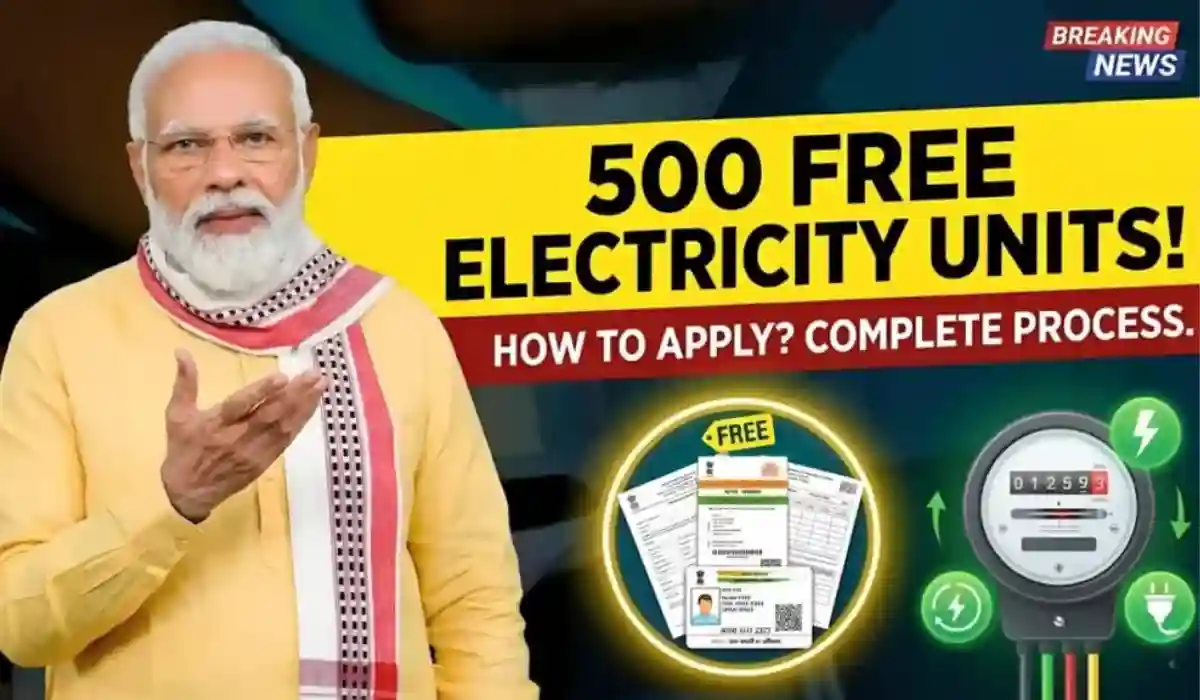
Free Electricity : In a bold announcement that’s created a buzz across India, the Government has proposed a first major benefit under a new social welfare scheme: 500 free electricity units for ration card holders. This move aims to alleviate rising living costs, boost financial stability, and give families with constrained budgets monthly relief on utility bills. While details are still being refined, the announcement signals a broader shift in policy focus toward targeted economic support.
Electricity bills are a significant expenditure for households nationwide, particularly in rural and low‑income urban areas. By promising free units of electricity tied to ration cards, the government is trying to ensure that the most economically vulnerable citizens — already certified under state and central public distribution systems — receive direct, measurable support. Experts say linking electricity benefits to existing welfare identifiers could streamline eligibility and distribution.
What the Proposed Scheme Could Mean for Households
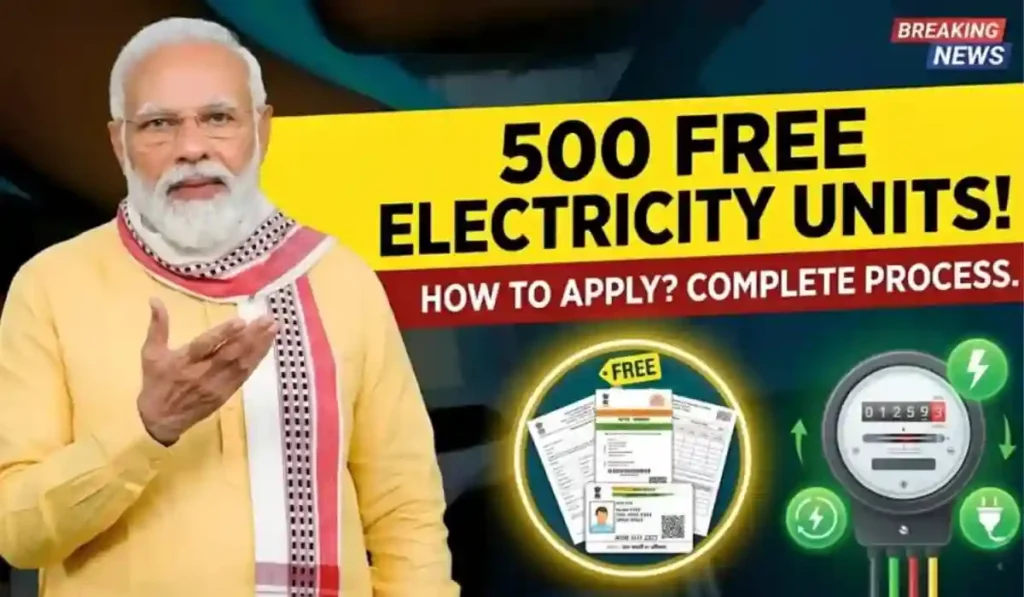
Although official documents on the new benefit are yet to be fully published, policy analysts believe the 500‑unit proposal represents a substantive enhancement over existing free electricity schemes. Across India, several states already provide free or subsidised power up to specific unit thresholds, but rarely as high as 500 units.
The push for such a generous benefit would directly lower monthly utility expenses for ration card holders, who are often the same households bearing the brunt of inflation in essential services. These families typically include agricultural labourers, small traders, daily wage earners, and pensioner households — all segments whose bills can exceed affordable thresholds quickly, especially during peak usage seasons like summer and winter.
Why Electricity Support Is a Game‑Changer for Welfare
Electricity is more than just a utility — it’s foundational for children’s education, health, and economic participation. Without reliable and affordable power, households may have to compromise on lighting, cooling, refrigeration, and even connectivity.
- Reduced financial strain: Free units could translate to substantial savings for families already balancing food, education, and healthcare costs.
- Improved quality of life: With basic power assured, students get consistent lighting for studies and small businesses can operate longer hours.
This proposed benefit builds on existing welfare traditions like subsidised food and energy, reinforcing safety nets while potentially driving demand for renewable energy solutions in the long run.
How This Scheme Differs from Existing Free Power Programmes
India’s electricity relief programmes vary significantly by state and structure. Right now, no official national programme offers 500 free units to ration card holders, but there are comparable initiatives that provide monthly free units tied to usage limits or connected benefits.
- State free units schemes: Some states give free or subsidised units, often capped at 100‑125 units per month for eligible residents.
- Subsidy on solar production: Central government schemes for rooftop solar panels can result in up to 300 units of free solar‑generated power, but these require investment and installation.
This new announcement, if implemented as described, would represent a significant upgrade in support levels for low‑income households holding ration cards, potentially changing how welfare electricity benefits are conceived and administered.
Eligibility: Who Could Benefit First
While formal eligibility criteria are expected to be released soon, preliminary government sources suggest that priority will be given to ration card holders who meet specific consumption patterns and Aadhaar linkages. Authorities are reportedly considering a digital verification system to ensure benefits reach the intended recipients quickly and accurately.
Anticipated eligibility highlights include:
- Households with active ration cards linked with Aadhaar and electricity accounts.
- Consumption thresholds that align with cost relief goals but prevent misuse.
- Possible integration with existing social welfare identifiers to simplify enrolment.
This structured approach could help avoid past pitfalls like benefit duplication or misallocation that occasionally occur in large‑scale welfare programmes.
How the Government Plans to Implement the Scheme
Government officials have indicated that the 500‑unit relief will be administered through existing electricity billing platforms, possibly linked to smart meters and consumption tracking systems. This method ensures transparency and automatic crediting of free units before billing calculations.
Officials envision a seamless digital enrolment experience for eligible households, minimizing paperwork while requiring minimal disruption to existing billing cycles. Utilities and power distribution companies will likely play a key role in rolling out the programme, with coordination from state and central welfare departments.
This model allows efficient monitoring of consumption patterns while keeping administrative costs low — a winning combination for large‑scale public benefit schemes.
State-by-State Eligibility and Free Electricity Units
| State | Current Free Units / Month | Eligibility Highlights | Notes on 500-Unit Proposal |
|---|---|---|---|
| Karnataka | 200 units | BPL households, domestic consumers with electricity bills under subsidy limit | New scheme would more than double current benefits for ration card holders |
| Bihar | 125 units | Households with electricity connections and valid ration cards | Proposed 500 units would significantly boost relief for low-income families |
| Delhi | 200 units | Domestic consumers under government welfare schemes | 500-unit plan would offer 2.5x current support for eligible ration card holders |
| Tamil Nadu | 100–150 units | Low-income and BPL families; subsidy linked to meter reading | New scheme would raise free units substantially, easing household bills |
| Madhya Pradesh | 150 units | Domestic households under state welfare programmes | New scheme could become the largest electricity relief benefit for ration card holders in the state |
| Telangana | 200 units | Eligible domestic connections with welfare verification | 500 units would provide 2.5x current monthly support, easing financial burden |
Key Takeaways:
- Most states currently provide 100–200 free units per month for eligible households.
- The proposed 500 units would be the highest-ever electricity relief for ration card holders nationally.
- Eligibility is likely to include ration card, Aadhaar linkage, and active electricity connection.
- Implementation will probably involve digital crediting via electricity billing systems, minimizing paperwork.
What Experts Say About the Broader Impact
Economists and policy analysts view the proposed 500 free units as a structural boost for household economic security, especially given rising energy costs nationwide. Affordable energy access can stimulate local economies by supporting micro‑entrepreneurs and reducing operating costs for small businesses at the household level.
Moreover, energy planners suggest that pairing this relief with renewable energy incentives could accelerate green transitions, reduce carbon footprints, and strengthen energy independence. Such dual focus — economic relief and sustainability — aligns with modern policy best practices and global development goals.
Consumer Voices and Public Expectations
In communities across India, reactions to the news have been hopeful but cautious. Many ration card holders see this move as a potentially transformative step, while others urge the government to ensure consistent power supply and effective implementation alongside the benefit.
Public discussions reflect a desire for policies that not only promise free units but also invest in electricity infrastructure — stable grids, fewer outages, and improved reliability. This nuance underscores how citizens increasingly value not just relief schemes but the tangible quality of the services they depend on daily.
Final Thoughts: A Bold Step Toward Inclusive Growth
The proposed plan to offer 500 free electricity units to ration card holders represents a major pivot in India’s welfare strategy, with the potential to positively affect millions of households. If implemented successfully, this benefit would not only reduce financial strain but also help foster a more equitable distribution of essential resources across socio‑economic groups.
While the details are still being finalised, the broad public and expert support for targeted electricity relief highlights a growing recognition: access to affordable energy is no longer a luxury — it’s a basic pillar of modern life and economic dignity.
FAQs About 500 Free Electricity Units for Ration Card Holders
Q1: Who is eligible for the 500 free electricity units?
A: Primarily, ration card holders with active electricity connections are expected to qualify. Eligibility may also require linking Aadhaar with the ration card and electricity account. Authorities are likely to verify household consumption patterns to ensure fair distribution.
Q2: How will the free units be provided?
A: The 500 units will likely be credited directly through electricity bills each month. Smart meters or existing billing systems may track usage, so eligible households receive units automatically without extra paperwork.
Q3: Will this scheme be the same in every state?
A: Free electricity programmes vary by state. Some states already provide 100–200 units per month, while the new proposal promises up to 500 units nationally for eligible ration card holders. States may adapt the scheme according to local infrastructure and consumption rules.
Q4: How can families apply or check their eligibility?
A: Households should monitor official state or central government announcements. Eligibility checks will likely involve ration card verification, Aadhaar linkage, and active electricity account status. Utilities may provide online portals or SMS updates for easy tracking.