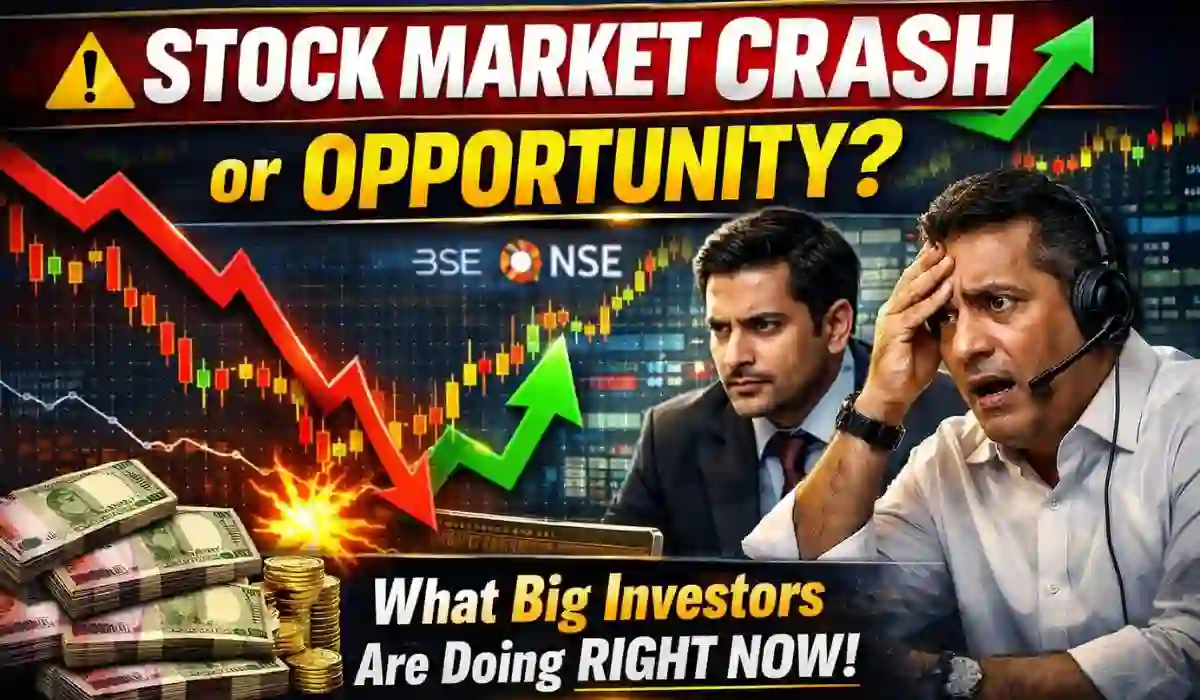
The stock market has entered a phase where headlines feel confusing, emotions are high, and investors are divided. Some fear a major crash, while others quietly prepare for opportunity. This moment is crucial for understanding real signals, not noise. Let us decode what is truly happening and how smart money is reacting right now.
Market Volatility Is Raising Genuine Questions
Global stock markets have recently shown sharp swings, making investors uneasy. Daily ups and downs, sudden sectoral corrections, and mixed economic data have created an environment where confidence feels fragile. Yet, volatility alone does not define a crash; it often reflects uncertainty adjusting to new information.
Historically, such phases appear when markets transition between growth cycles. Inflation trends, interest rate expectations, and geopolitical developments are being reassessed simultaneously. This reassessment creates temporary discomfort but also lays the foundation for future clarity, which experienced investors watch very closely.
Understanding the Difference Between Panic and Correction
A stock market crash is driven by fear, forced selling, and liquidity stress. A correction, however, is a natural reset after strong rallies. Today’s environment shows selective selling rather than broad-based panic, indicating a correctional phase rather than systemic breakdown.

Big institutional indicators such as stable bond yields, controlled currency movement, and orderly derivatives markets suggest structure remains intact. When markets correct without breaking fundamentals, long-term investors often interpret it as a healthy adjustment rather than a warning signal.
What Big Investors Are Quietly Observing
Large investors focus less on daily price movement and more on earnings quality, cash flow stability, and long-term demand trends. They are spending time evaluating which sectors can sustain profitability even if economic growth slows modestly.
Instead of reacting emotionally, institutional players analyze data deeply. They track consumption patterns, credit growth, and corporate balance sheets. This calm observation phase often precedes strategic deployment of capital when valuations become more reasonable.
Smart Money Is Rotating, Not Exiting
Rather than exiting markets entirely, big investors are rotating money from overheated segments into fundamentally strong but temporarily ignored areas. This shift is subtle and rarely makes headlines, yet it shapes future market leadership.

Key areas attracting attention include:
- Companies with consistent earnings growth and low debt levels
- Businesses linked to infrastructure, energy transition, and essential services
- Financial institutions with improving asset quality and strong capital buffers
This rotation indicates confidence in long-term markets, not fear.
Why Cash Levels Are Rising Strategically
Holding higher cash does not mean pessimism; it reflects patience. Big investors increase cash positions to gain flexibility, allowing them to buy quality assets during deeper corrections without stress.
Current strategic cash positioning focuses on:

- Preparing for valuation comfort zones rather than chasing momentum
- Reducing portfolio volatility during uncertain macro phases
- Maintaining liquidity to act decisively when opportunities emerge
This approach shows discipline, not doubt about the market’s future.
Long-Term Investors Are Staying Firm
Investors with longer horizons understand that wealth is built across cycles, not in perfect conditions. They remain invested in businesses with durable advantages, strong management, and clear growth visibility over the next decade.
These investors use volatility to average positions rather than abandon them. History consistently shows that staying invested during uncertain phases often delivers better outcomes than attempting to perfectly time exits and re-entries.
Retail Investors Should Focus on Clarity, Not Noise
For everyday investors, the biggest risk is emotional decision-making. Constant exposure to negative headlines can push people to sell at lows and buy at highs. Successful investing requires filtering information and focusing on personal financial goals.
Building a disciplined approach through diversification, staggered investing, and realistic expectations helps reduce stress. Markets reward patience far more than prediction, especially during uncertain but transitional phases like the current one.
Is This a Risk or a Rare Opportunity?
Every major opportunity in market history has appeared disguised as fear. While risks exist, valuations in select stocks and sectors are becoming more reasonable. This selective opportunity environment favors informed investors over impulsive traders.
Those who align investments with strong fundamentals, long-term themes, and financial discipline are better positioned. Markets may not move straight up, but opportunities often emerge quietly when confidence feels lowest.
Final Thoughts
This moment is neither a guaranteed crash nor a blind buying phase. It is a thinking phase. Big investors are calm, strategic, and patient, focusing on quality and long-term value. For everyday investors, clarity, discipline, and emotional control matter more than predictions.
Markets will always test confidence before rewarding patience. Those who stay informed, avoid panic, and respect long-term fundamentals often look back at such phases as turning points rather than threats.