
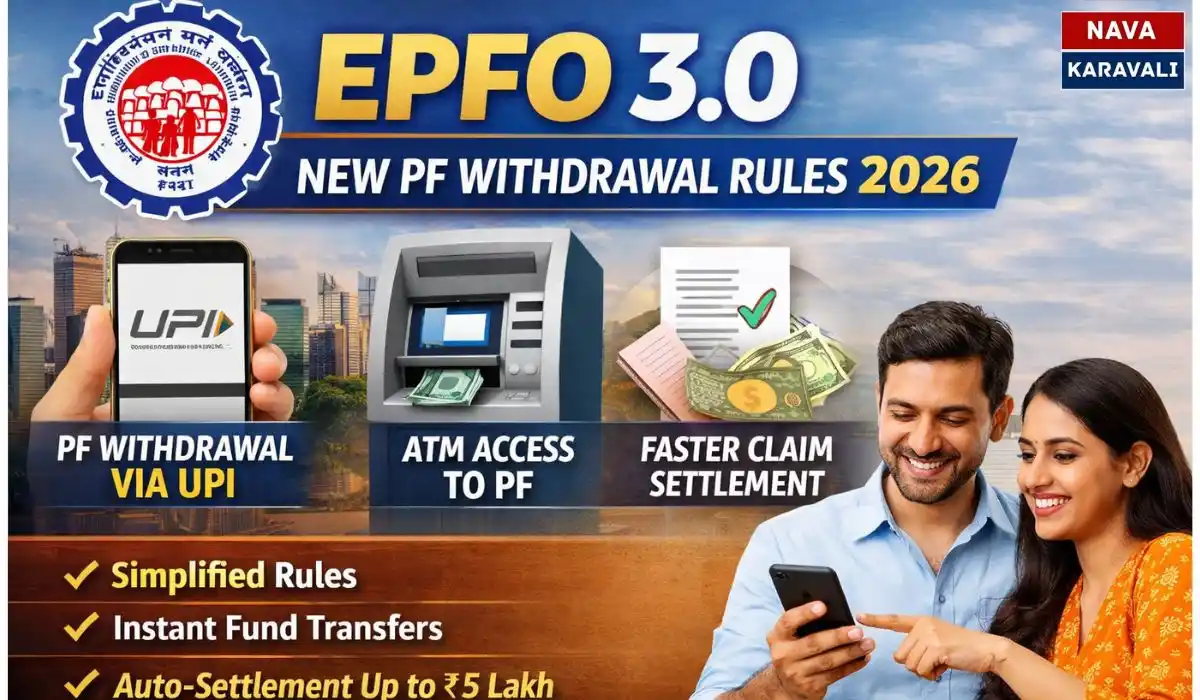
The Employees’ Provident Fund Organisation (EPFO) is rolling out EPFO 3.0, a landmark digital upgrade that is set to transform how millions of salaried Indians access their provident fund savings. With features such as UPI-based PF withdrawals, ATM access, quicker claim settlement, and simplified withdrawal rule, the new system marks one of the most significant reforms in India’s social security framework in recent years.
The initiative aims to make EPF services as seamless as modern banking, reducing paperwork, delays, and dependency on employers.
What Is EPFO 3.0?
EPFO 3.0 is the third-generation technology overhaul of the provident fund system. It replaces legacy infrastructure with a core banking–style digital platform, enabling real-time processing, automated verification, and nationwide service portability.
According to officials familiar with the rollout, the focus of EPFO 3.0 is to:
- Speed up withdrawals and settlements
- Improve transparency for members
- Reduce manual intervention and errors
- Strengthen data security and system reliability
PF Withdrawal via UPI: A Major Shift
One of the most anticipated features under EPFO 3.0 is the introduction of PF withdrawal through UPI.
Once implemented, eligible EPF members will be able to:
- Withdraw approved PF amounts directly using UPI apps
- Receive funds instantly in their linked bank accounts
- Avoid long waiting periods associated with traditional claim processing
This move is expected to significantly benefit employees during medical emergencies and urgent financial needs.
ATM Access to Provident Fund Money
EPFO is also working on enabling ATM-based withdrawals, allowing members to access their provident fund in a manner similar to a bank account.
While detailed operational guidelines are awaited, the facility is expected to:
- Offer quick cash access in emergencies
- Improve accessibility for members in non-metro areas
- Reduce dependence on online-only systems
Simplified PF Withdrawal Rules
To make the system more user-friendly, EPFO has restructured withdrawal norms by merging multiple conditions into three broad categories:
1. Essential Needs
Medical treatment, education, and marriage-related expenses
2. Housing Needs
Home purchase, construction, or repayment of home loans
3. Special Circumstances
Financial distress, job loss, or unforeseen emergencies
Key Rule Highlights:
- Minimum service requirement of 12 months
- Members can withdraw a substantial portion of eligible funds
- A portion of the balance remains protected for retirement security
Faster Claim Settlement with Higher Limits
Under EPFO 3.0:
- Auto-settlement limit has been increased to ₹5 lakh
- Claims are expected to be processed within a few days for KYC-compliant accounts
- Digital verification reduces rejection and resubmission rates
This is expected to significantly improve user satisfaction and trust in the EPF system.
Self-Service Corrections Without Employer Approval
EPFO 3.0 allows members to update personal details such as:
- Name
- Date of birth
- Family information
These corrections can be done online without employer approval, provided Aadhaar and KYC details are verified — a long-standing demand of EPF subscribers.
Why EPFO 3.0 Matters
Financial experts say EPFO 3.0 balances liquidity and long-term retirement protection, making the provident fund more responsive to real-life financial needs.
Benefits for Members:
- Faster access to savings
- Reduced paperwork and delays
- Greater control and transparency
- Improved confidence in retirement planning
What EPF Members Should Do Now
To take full advantage of EPFO 3.0 features, members are advised to:
- Activate their UAN
- Link Aadhaar and bank account
- Complete KYC verification
- Keep mobile number updated
Members with fully verified accounts will benefit first as new features are rolled out in phases through 2026.
EPFO 3.0 represents a historic shift in India’s provident fund system. With UPI and ATM withdrawals, faster settlements, and simplified rules, EPFO is moving closer to a truly digital, member-first institution.
As the rollout progresses in 2026, salaried employees can expect a future where accessing their PF savings is faster, simpler, and more reliable than ever before.