
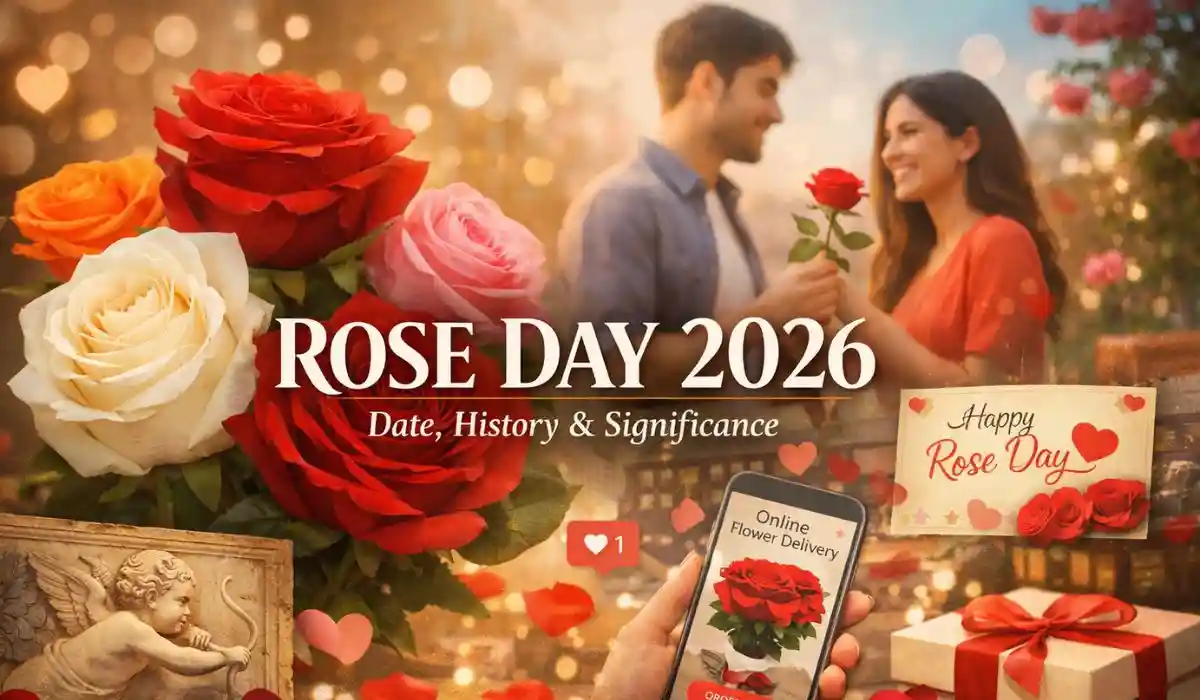
Rose Day, celebrated every year on February 7, marks the beginning of Valentine’s Week and sets the emotional tone for one of the most commercially and culturally significant weeks of the year. In 2026, Rose Day once again emerges not just as a romantic tradition, but as a reflection of evolving relationships, emotional expression, and modern gifting trends.
What Is Rose Day and Why It Matters
Rose Day is the first day of Valentine’s Week, followed by Propose Day, Chocolate Day, Teddy Day, Promise Day, Hug Day, Kiss Day, and finally Valentine’s Day. On this day, people express emotions—love, admiration, friendship, or respect—by gifting roses of different colors, each symbolizing a distinct feeling.
Despite the rise of digital communication and virtual gifting, the rose continues to hold its place as one of the most powerful non-verbal expressions of emotion. Relationship experts note that tangible gestures like flowers create stronger emotional recall than digital messages alone, reinforcing Rose Day’s relevance even in 2026.
History and Origins of Rose Day
The tradition of gifting roses dates back centuries, with roots in ancient Roman and Greek civilizations where roses were associated with goddesses of love such as Venus and Aphrodite. In modern times, Rose Day became popular as part of Valentine’s Week through Western influence and global pop culture, eventually gaining massive popularity in countries like India due to social media, cinema, and youth culture.
Over the last decade, Rose Day has expanded beyond romantic partners to include friends, family members, and even self-love gestures, reflecting broader social acceptance of emotional expression.
Meaning of Rose Colors on Rose Day
The symbolism of roses plays a central role in the celebration:
- Red Rose signifies deep love and passion
- Pink Rose represents admiration and gratitude
- White Rose stands for purity, peace, and respect
- Yellow Rose symbolizes friendship and joy
- Orange Rose conveys enthusiasm and attraction
Florists report that red and pink roses continue to dominate sales, but yellow roses have seen rising demand among Gen Z consumers who increasingly celebrate Rose Day as a friendship-focused occasion.
Rose Day 2026: Trends and Consumer Behavior
According to retail and e-commerce insights, Rose Day has become a major driver of seasonal sales in flowers, personalized gifts, chocolates, and greeting cards. Online flower delivery platforms now account for a significant portion of Rose Day purchases, driven by same-day delivery, AI-based personalization, and subscription gifting models.
Social media platforms also play a critical role, with hashtags related to Rose Day generating millions of impressions globally. Short-form videos, reels, and story-based content have transformed Rose Day from a private gesture into a shared digital experience.
Cultural Significance in India
In India, Rose Day has grown into a mainstream celebration, particularly among urban youth. While traditional values once viewed Valentine’s Week as a Western concept, changing social dynamics and increasing openness around relationships have made Rose Day widely accepted across cities and small towns alike.
Educational institutions, workplaces, and brands now acknowledge the day through themed events, discounts, and campaigns, highlighting how Rose Day has moved from niche celebration to cultural phenomenon.
Why Rose Day Still Holds Emotional Power
Psychologists emphasize that symbolic acts—like gifting a rose—help people articulate feelings that are often difficult to express verbally. In a fast-paced digital world, Rose Day offers a moment of intentional emotional connection, making it more than just a commercial event.
As relationships continue to evolve, Rose Day remains relevant because it adapts—embracing romance, friendship, self-worth, and emotional honesty in equal measure.
Final Word
Rose Day 2026 is not just about flowers; it is about communication, connection, and emotional authenticity. Whether celebrated through a single rose, a heartfelt message, or a simple gesture, the day continues to resonate across generations, proving that some traditions never lose their meaning—only gain new ones.