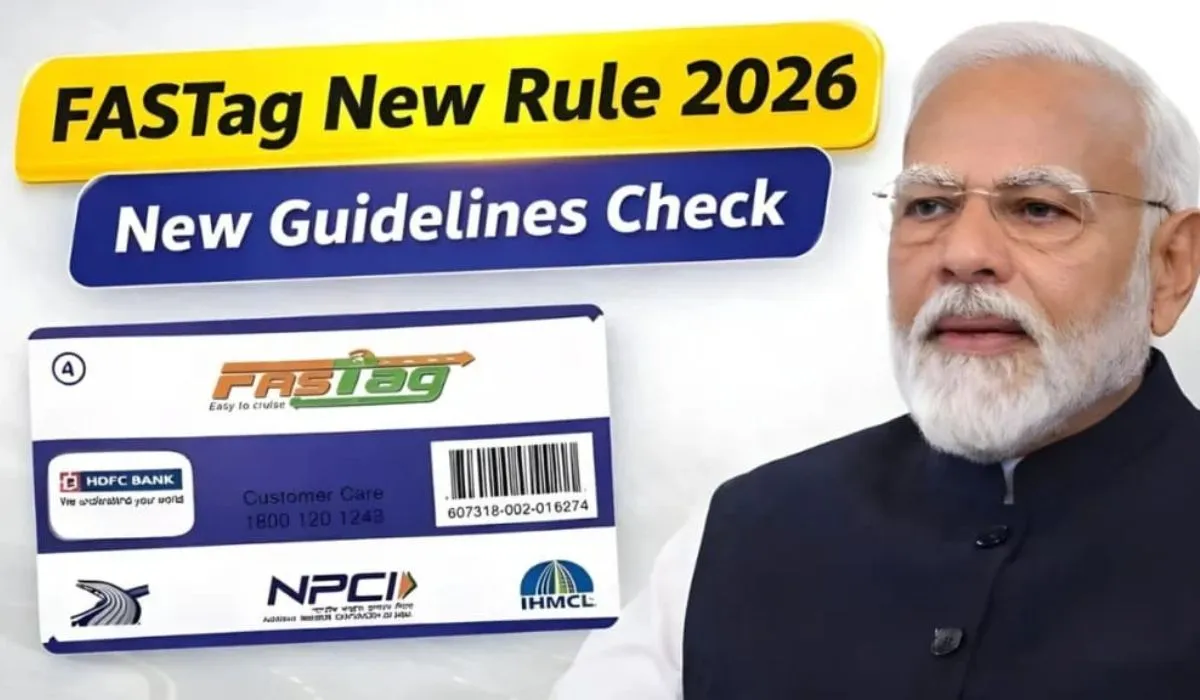
The National Highways Authority of India (NHAI), under the Ministry of Road Transport and Highways (MoRTH), has introduced key updates to the FASTag framework for 2026. These changes aim to simplify compliance for private vehicle owners, strengthen digital toll collection, and reduce congestion at toll plazas while maintaining enforcement against misuse.
The latest reforms bring relief to millions of commuters, especially private car owners, by removing redundant verification steps and clearly defining penalties for non-compliance.
Major Relief: Post-Activation KYV Removed for Private Vehicles
From February 1, 2026, post-activation Know Your Vehicle (KYV) verification will no longer be mandatory for new FASTags issued to private cars, jeeps, and vans.
What has changed:
- All vehicle verification will now be completed before FASTag activation using the government’s VAHAN database
- Users will no longer be asked to upload vehicle photos or documents repeatedly after activation
- Existing FASTags will not require KYV unless there is a specific issue such as:
- Incorrect vehicle linkage
- Suspected misuse or fraud
- Complaints or damaged/loose FASTags
This move is expected to significantly reduce activation delays and customer grievances related to repeated verification requests.

Note: Commercial vehicles such as trucks, buses, and multi-axle vehicles may still be subject to stricter verification norms.
FASTag Remains Mandatory on National Highways
Despite the KYV relaxation, FASTag continues to be compulsory for all vehicles using National Highway toll plazas across India.
To discourage cash payments and promote digital tolling, revised penalties introduced earlier continue to apply in 2026.
Toll charges without FASTag:
- Cash payment: 2× the normal toll fee
- UPI or other digital payment: 1.25× the normal toll fee
This differentiated structure is designed to reduce cash handling and encourage digital transactions at toll plazas.

Blacklisting, Low Balance & Penalty Rules Explained
Motorists must ensure that their FASTag is active and sufficiently funded. FASTags may be declined or penalized if they are:
- Blacklisted or hotlisted
- Carrying insufficient balance
- Improperly affixed or unreadable
FASTags flagged as inactive well before or shortly after toll scanning may result in transaction failure, forcing drivers to pay penalty rates manually.
NHAI has also reiterated that loosely pasted or damaged FASTags can be blacklisted to prevent misuse.
Why the Government Made These Changes
According to officials, the updated FASTag rules focus on three core objectives:

- Ease of Use: Removing unnecessary post-activation KYV reduces paperwork and user frustration
- Digital Push: Differential penalties favor FASTag and UPI over cash payments
- System Integrity: VAHAN-based pre-activation verification ensures accurate vehicle mapping and fraud prevention
Together, these measures are expected to improve toll efficiency, reduce queues, and enhance the overall highway travel experience.
What Vehicle Owners Should Do in 2026
To avoid penalties or disruptions while traveling on national highways, users should:
- Keep FASTag active and properly linked to the vehicle
- Maintain adequate balance before highway journeys
- Ensure FASTag is firmly affixed to the windshield
- Respond promptly to any verification request from the issuing bank
- Prefer FASTag or UPI payments over cash
FASTag Rules 2026: Quick Summary
| Rule | Status |
|---|---|
| FASTag mandatory on National Highways | Yes |
| Post-activation KYV for new private vehicles | Removed |
| Pre-activation VAHAN verification | Mandatory |
| Cash payment without FASTag | 2× toll |
| UPI payment without FASTag | 1.25× toll |
| Blacklisting for low balance / loose tag | Enforced |
Bottom Line
The FASTag 2026 update strikes a balance between user convenience and strict compliance. While verification hassles have been reduced for private vehicle owners, penalties remain in place to ensure smooth, cashless toll operations nationwide.
Staying informed and maintaining a valid FASTag will help drivers avoid extra charges and ensure seamless highway travel in 2026 and beyond.