
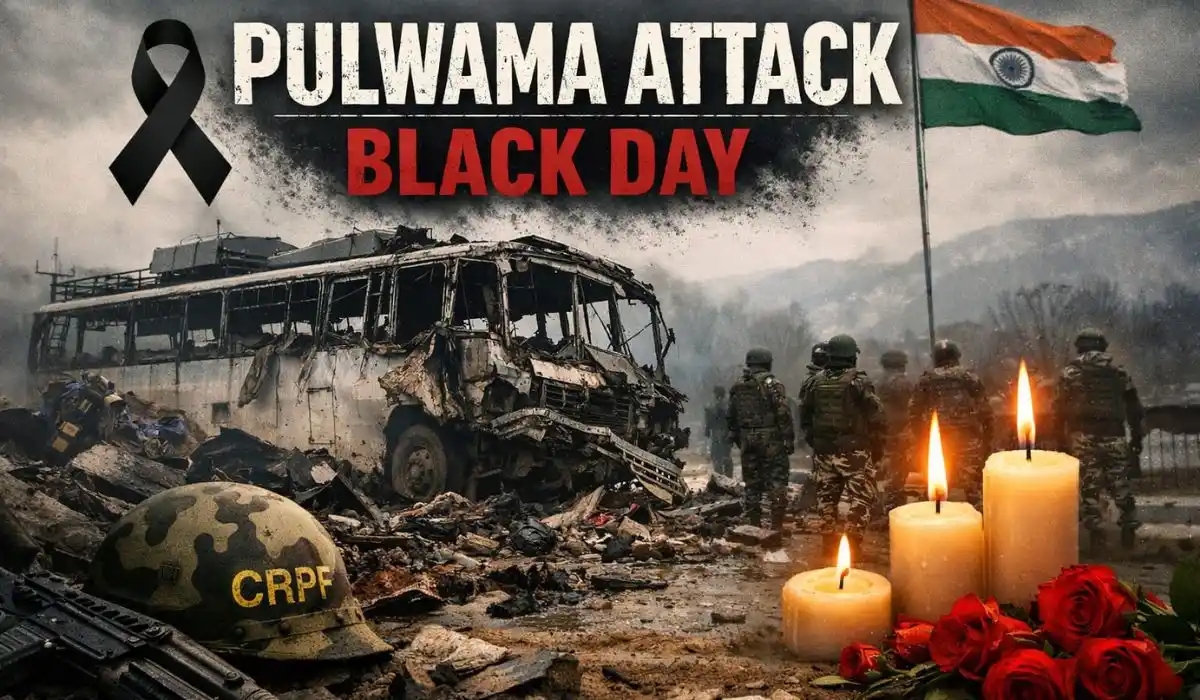
In India, February 14 is observed by many as “Black Day” to honor the memory of the soldiers martyred in the 2019 Pulwama terror attack. Across cities and villages, people hold candle marches, prayer meetings, and tribute events to express solidarity with the families of the fallen. The day has become a solemn national remembrance, reinforcing collective gratitude toward the armed forces and a shared resolve against terrorism.
The Incident at Pulwama district That Led to Black Day Observance
On February 14, 2019, a convoy of the Central Reserve Police Force was attacked by a suicide bomber in Pulwama district, Jammu and Kashmir, resulting in the loss of 40 personnel. The scale and shock of the tragedy moved the nation deeply, prompting widespread mourning and annual remembrance. This incident is the reason many Indians refer to the date as Black Day.
Tributes at National War Memorial and Across the Country
Leaders, officials, and citizens gather at the National War Memorial in New Delhi and other memorial sites to lay wreaths and observe moments of silence. Schools, colleges, and social organizations conduct remembrance programs highlighting the courage of the martyrs. These tributes ensure the memory of the sacrifice remains alive in public consciousness.
Why Black Day Is Important for National Awareness and Unity
Black Day is not only about mourning but also about awareness, unity, and respect for those who protect the nation. It encourages younger generations to understand the cost of national security and value the dedication of security forces. The observance strengthens a sense of shared responsibility and patriotic remembrance across communities.
Conclusion: A Day of Solemn Remembrance and Collective Respect
February 14 as Black Day stands as a reminder that the nation never forgets its heroes. Through annual tributes and public remembrance, India honors the courage of the Pulwama martyrs and reaffirms its gratitude to the armed forces.