
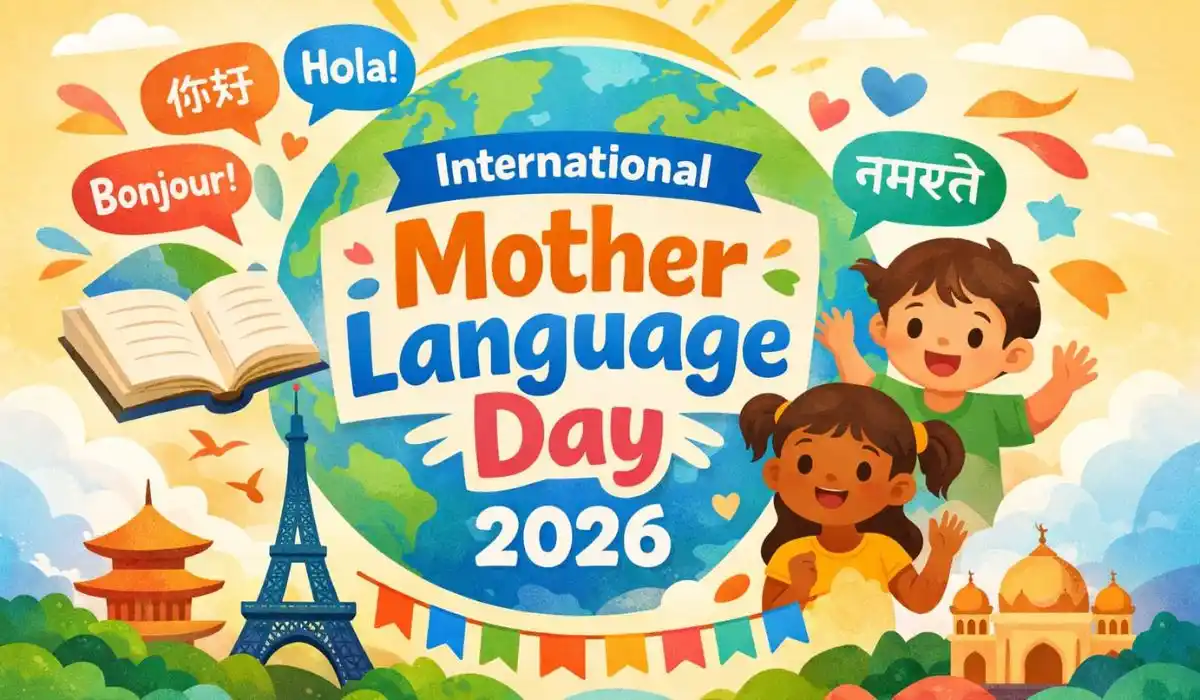
International Mother Language Day, observed every year on 21 February, is more than a symbolic date on the calendar. It is a powerful global reminder that language shapes identity, preserves culture, and connects generations. Across continents, communities celebrate their native tongues while reflecting on the urgent need to protect endangered languages in a rapidly globalizing world.
In 2026, the observance carries even deeper relevance as digital communication continues to dominate everyday life. While technology has connected billions, it has also accelerated the decline of smaller languages. Governments, educators, and cultural organizations are now working together to ensure that linguistic diversity thrives both offline and online.
- Promotes preservation of over 7,000 global languages
- Encourages multilingual education systems
- Raises awareness about endangered languages
The Historic Roots of 21 February
The significance of 21 February traces back to the 1952 Language Movement in present-day Bangladesh. On this day, students protested for the recognition of Bangla as a state language and made the ultimate sacrifice. Their courage transformed the movement into a defining moment in linguistic and cultural rights history.
Recognizing the global importance of linguistic diversity, UNESCO proclaimed International Mother Language Day in 1999. Since 2000, countries worldwide have officially observed the day, honoring those who fought for language rights and promoting inclusive communication practices.
- Commemorates the 1952 Language Movement
- Honors language martyrs and cultural defenders
- Officially recognized globally since 2000
Why Mother Languages Matter in Modern Society
A mother language is the first language a person learns at home, forming the foundation of thought, emotion, and identity. Research consistently shows that children educated in their mother tongue during early schooling perform better academically and develop stronger cognitive skills.
Beyond education, language preserves oral traditions, indigenous knowledge, and historical narratives. When a language disappears, unique cultural wisdom disappears with it. Protecting mother languages ensures that diversity remains a living reality, not just a historical memory.
- Strengthens cognitive and academic development
- Preserves cultural and historical heritage
- Promotes inclusive and equitable societies
The Role of Education and Technology in 2026
Educational institutions worldwide are integrating multilingual teaching methods to ensure inclusive learning environments. Digital platforms are also introducing tools that allow content creation in regional and indigenous languages, helping communities maintain linguistic relevance in the digital era.
However, experts warn that without proactive policies, many languages could vanish within decades. Governments are increasingly collaborating with cultural organizations to digitize rare texts, create online dictionaries, and provide translation support to sustain linguistic ecosystems.
- Expansion of multilingual digital platforms
- Government-backed language preservation policies
- Increased community participation in language revival
How Countries Observe International Mother Language Day
Countries observe the day through educational campaigns, cultural programs, and policy announcements aimed at strengthening language rights. Schools organize essay competitions, poetry recitations, and storytelling sessions that celebrate local dialects and traditions.
In Bangladesh, citizens pay tribute at the Shaheed Minar monument, symbolizing the sacrifices made for linguistic freedom. Around the world, embassies, universities, and cultural centers host seminars highlighting the importance of linguistic inclusion in modern governance and development.
- Cultural events and literary programs
- Public awareness campaigns
- Policy discussions on language rights
Conclusion:
International Mother Language Day 2026 reminds us that language is not merely a communication tool — it is a living expression of identity, heritage, and human dignity. In an interconnected world, preserving linguistic diversity ensures that every culture retains its unique voice and perspective.
As communities celebrate 21 February, the message is clear: protecting mother languages strengthens global unity rather than dividing it. By supporting multilingual education and inclusive digital practices, societies can create a future where every language continues to tell its story proudly.