
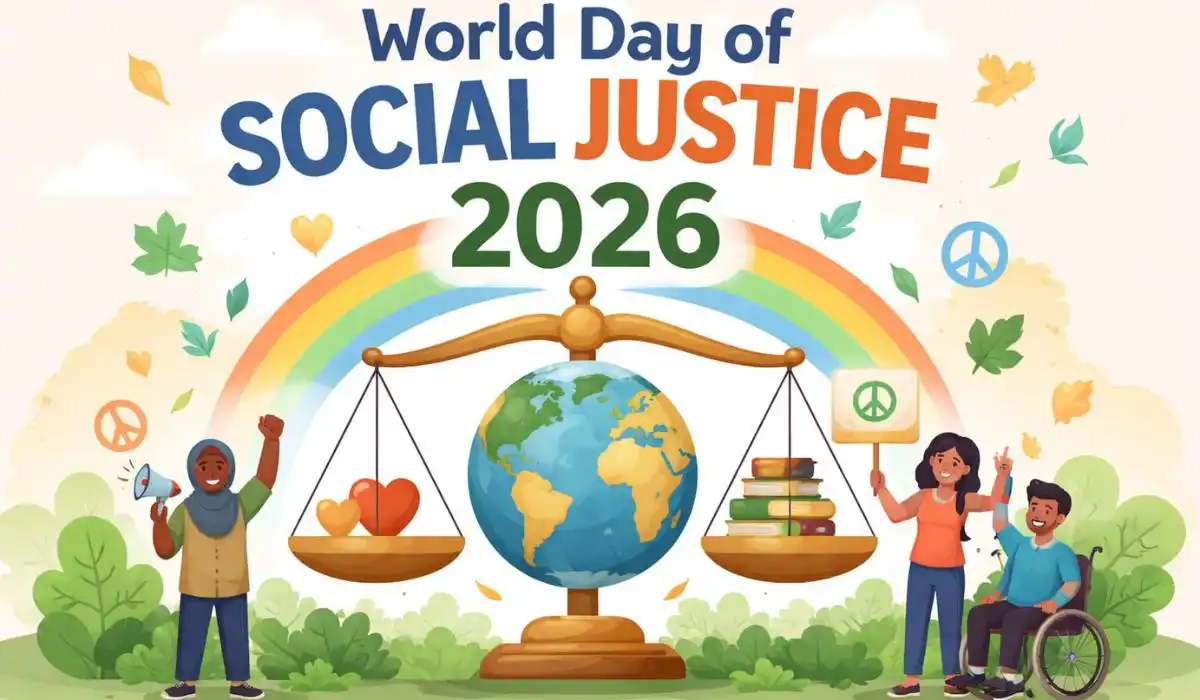
World Day of Social Justice, observed annually on 20 February, is a powerful global reminder that inclusive growth and equal opportunity are essential for sustainable development. Recognized by the United Nations, this international observance highlights urgent issues such as poverty reduction, employment rights, gender equality, and social protection systems.
In 2026, the message of social justice resonates strongly as nations continue addressing economic inequality, climate vulnerability, and workforce transitions in a digital economy. Governments, civil society groups, and global institutions are using this day to renew commitments toward fair wages, access to education, and the protection of marginalized communities.
Global Significance of World Day of Social Justice
World Day of Social Justice is not just symbolic; it serves as a strategic platform for policy dialogue and measurable action. Countries use this observance to evaluate progress in reducing inequality and expanding social protection frameworks aligned with sustainable development goals.
The global conversation increasingly focuses on balancing economic growth with human dignity. Social justice policies are being integrated into labor reforms, inclusive education systems, and digital access programs to ensure no community is excluded from progress.
- Promotes equality and human rights worldwide
- Encourages inclusive economic development
- Strengthens social protection and fair labor standards
Addressing Poverty and Economic Inequality
Poverty remains one of the biggest barriers to social justice, especially in developing economies. Governments and international agencies are emphasizing targeted welfare schemes, minimum wage policies, and financial inclusion initiatives to bridge income gaps.
Economic inequality affects access to healthcare, housing, and education. By investing in skill development and entrepreneurship programs, policymakers aim to create long-term economic resilience rather than short-term relief.
- Expanding employment and skill training programs
- Improving access to affordable healthcare
- Strengthening financial inclusion policies
Education and Youth Empowerment
Education is a cornerstone of social justice, providing equal opportunities regardless of background. Countries are increasingly investing in digital learning infrastructure and scholarship programs to support disadvantaged students.
Youth empowerment initiatives are also gaining attention, as young people represent the largest workforce segment in many nations. Skill-based training and innovation programs are helping youth adapt to evolving industries and technology-driven economies.
- Promoting equal access to quality education
- Supporting youth entrepreneurship initiatives
- Encouraging digital literacy and innovation
Gender Equality and Social Inclusion
Gender equality remains central to the social justice agenda. Women and marginalized genders often face wage gaps, limited career growth, and unequal representation in leadership roles.
Inclusive policies, including maternity protections, workplace diversity standards, and legal safeguards, are helping create safer and more equitable environments. Social inclusion efforts also address caste, disability, and minority rights to ensure fairness across all communities.
- Closing gender wage gaps
- Enforcing anti-discrimination laws
- Promoting workplace diversity and inclusion
Role of Governments and Civil Society
Public policy plays a decisive role in advancing social justice goals. Governments are collaborating with NGOs, private sectors, and global organizations to implement transparent welfare systems and fair labor laws.
Civil society movements and grassroots organizations amplify marginalized voices, ensuring accountability in governance. Community-level initiatives often serve as testing grounds for scalable social justice reforms.
- Strengthening labor rights protections
- Expanding public welfare programs
- Encouraging public-private partnerships
Conclusion:
World Day of Social Justice 2026 reminds us that equality, dignity, and opportunity must be more than policy goals—they must become lived realities. Social justice is not limited to governments or global institutions; it begins within communities, workplaces, and individual actions.
As nations navigate economic uncertainty and social transformation, sustained commitment to fairness and inclusion will define long-term progress. By promoting equal access to resources, protecting fundamental rights, and empowering vulnerable groups, societies can move closer to a truly just and inclusive future.