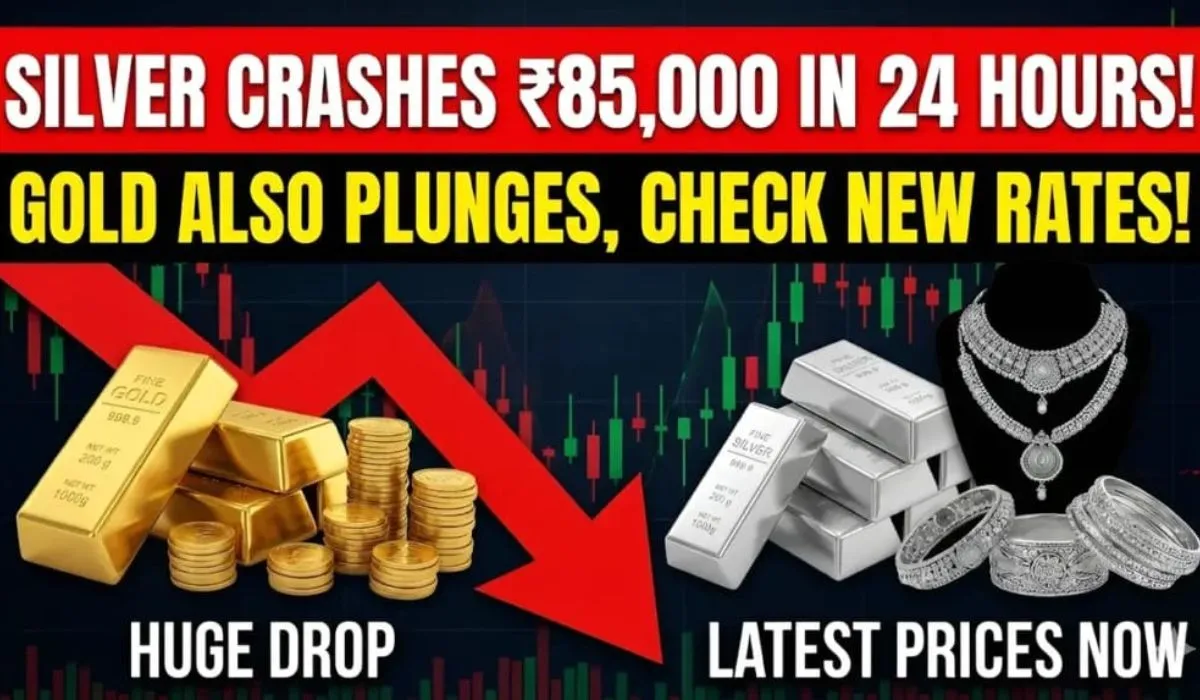
Gold and silver prices have seen a sharp correction on 17 February 2026 after touching record highs earlier this year. The fall is mainly linked to global profit booking, a stronger US dollar, and expectations of higher global interest rates. Despite the short-term drop, analysts say long-term demand from central banks, jewellery buyers, and industrial sectors remains strong.
Silver has fallen faster than gold because it is more sensitive to industrial demand cycles and speculative trading. Market experts currently see this fall as a correction phase rather than a long-term crash, but short-term volatility may continue.
Current price fall is widely seen as a correction after a strong rally. Long-term demand from jewellery markets, central bank reserves, and green-energy industrial demand (especially for silver) is expected to support prices over time. However, short-term movement will depend heavily on US dollar strength, global inflation data, and interest rate decisions.
is a seasoned multi-niche content writer and digital journalist with 12 years of experience covering breaking news, technology updates, automobile trends, astrology insights, finance guidance, and job recruitment alerts. Known for accuracy, clarity, and reader-focused reporting, they simplify complex topics into trustworthy, easy-to-understand content. Their work is dedicated to keeping readers informed, empowered, and prepared for real-world decisions.