
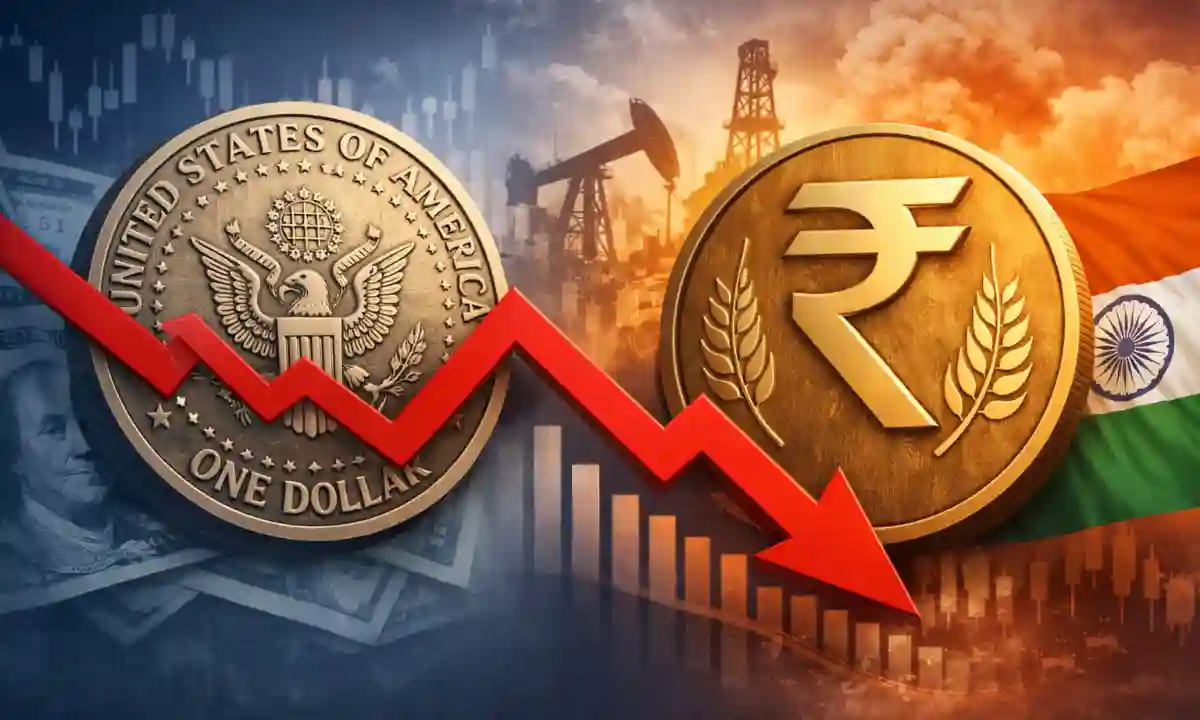
Staying updated on currency fluctuations is vital for your finances, whether you are an investor, a student abroad, or a business owner. Today, March 10, 2026, the Indian Rupee is navigating some choppy waters against the US Dollar. Let’s dive into the latest rates and what’s driving these shifts.
Today’s Live Exchange Rate: March 10, 2026
The forex market opened with significant volatility today. The rupee remains under pressure as demand for the greenback strengthens globally.
| Category | Value (Approx.) |
| Current USD to INR | $1 = 92.15$ |
| Day Range | 91.87 – 92.33 |
| Previous Close | 91.74 |
| Market Sentiment | Bearish (Weakening Rupee) |
Recent Historical Trends
The rupee has seen a sharp downward trajectory over the last week. The breach of the 92-mark represents a significant psychological and technical shift in the currency markets.
| Date | Exchange Rate (USD/INR) | Market Status |
| March 10, 2026 | 92.15 | High Volatility |
| March 9, 2026 | 92.33 | All-time Low |
| March 6, 2026 | 91.74 | Weekly Close |
| March 4, 2026 | 92.18 | Previous Record |
Primary Drivers of the Rupee’s Decline
Understanding why the rupee is sliding requires looking at global commodity markets. India, as a major oil importer, is particularly sensitive to energy price hikes.

1. The Crude Oil Factor
Brent crude has surged above $\$110$ per barrel. When oil prices rise, India needs more dollars to pay for its imports, which naturally weakens the rupee.
2. Geopolitical Tensions
Ongoing instability in the Middle East has led to a “risk-off” sentiment. Investors are pulling money out of emerging markets like India and moving it into “safe-haven” assets like the US Dollar and Gold.
3. Foreign Fund Outflows
Foreign Institutional Investors (FIIs) have been net sellers in the Indian equity markets recently, further draining dollar reserves.
Economic Impact Analysis
A weaker rupee has a cascading effect on the Indian economy. While it may benefit exporters, it poses a challenge for domestic inflation.

| Sector | Impact of Weak Rupee |
| Imports | Becomes more expensive (Oil, Electronics, Edible Oil). |
| Exporters | Higher earnings when converted from USD to INR (IT, Textiles). |
| Inflation | Risk of “Imported Inflation” as transport costs rise. |
| Foreign Education | Increased costs for students paying tuition in USD. |
The RBI’s Stance and Future Outlook
The Reserve Bank of India (RBI) typically intervenes by selling dollars from its forex reserves to prevent a “runaway” depreciation of the rupee. Analysts are keeping a close eye on the 93.00 level.
Expert Insight: If Brent crude remains sustained above $\$110$, we could see the rupee testing the 93.00 resistance level before the end of the month.
Conclusion
As we navigate these record-breaking shifts in the USD to INR rate, staying informed is your best strategy. While the current volatility is high, India’s strong forex reserves provide a buffer. We will continue to monitor the markets closely to bring you the most accurate and timely financial updates.