
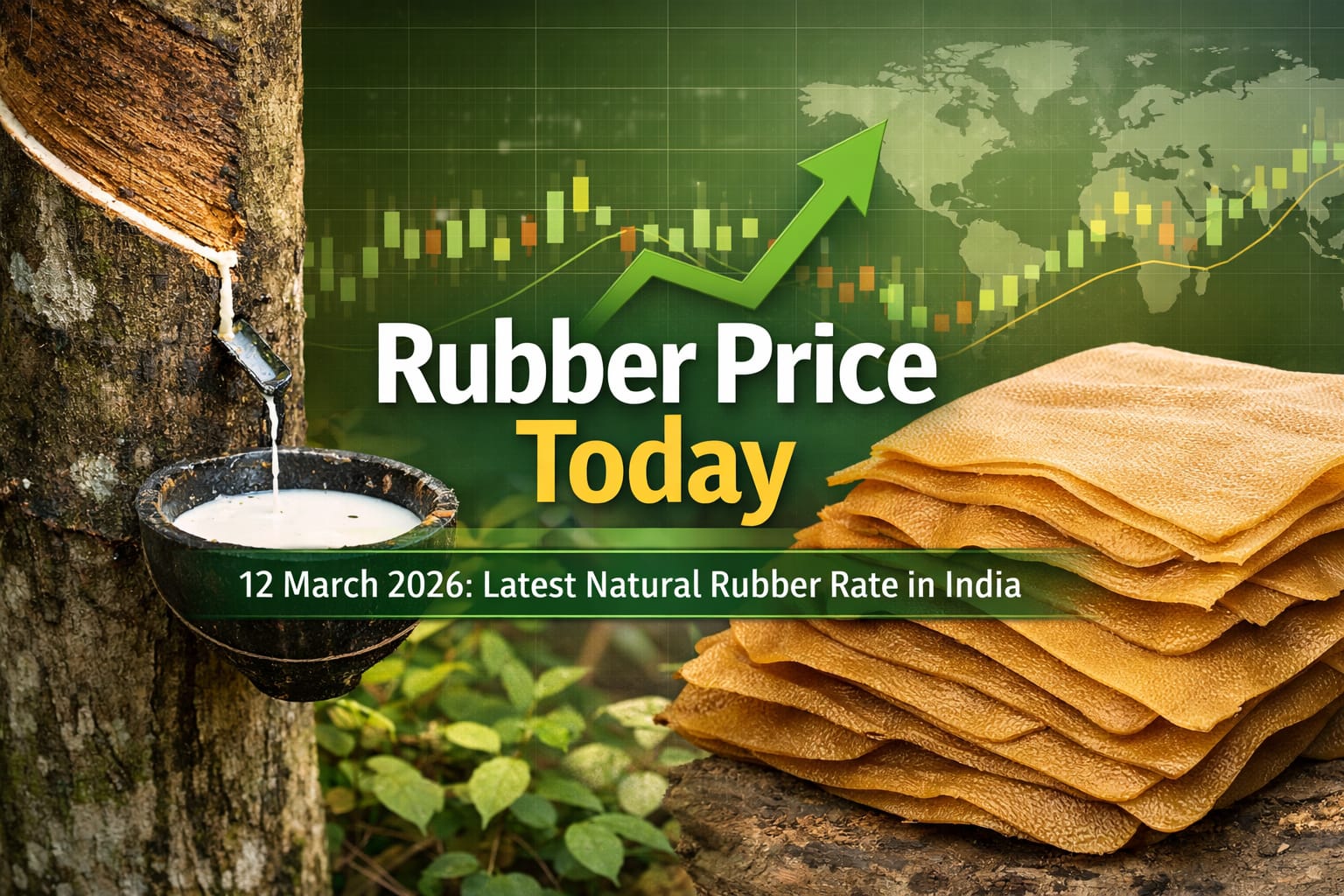
Stay ahead of the market with our comprehensive update on natural rubber prices for March 12, 2026. Whether you are a grower in Kerala or an industrial buyer, understanding today’s price volatility is essential. We break down the latest rates, global influences, and domestic trends to help you navigate the trade.
The Indian natural rubber market is currently navigating a period of significant fluctuation. Domestic prices have maintained a strong position despite a slight cooling from the peak seen earlier this month. The primary catalyst for the current price floor is the surge in international crude oil prices, which has made synthetic rubber—a primary alternative—much more expensive.
Domestic Price Breakdown by Grade
The following table provides the spot prices for various grades across India’s primary trading hubs.
| Rubber Grade | Kottayam (Kerala) | Agartala (Tripura) | Comparison to Last Week |
| RSS 4 | ₹215.00 / kg | ₹206.00 / kg | Slightly Down |
| RSS 5 | ₹210.00 / kg | ₹203.00 / kg | Stable |
| ISNR 20 | ₹188.00 / kg | N/A | Rising |
| Latex (60% DRC) | ₹144.75 / kg | N/A | High Demand |
The Impact of Global Geopolitics on Rubber
The “double whammy” of West Asian tensions and shipping disruptions in the Strait of Hormuz has sent ripples through the commodity markets. As Brent crude hovers between $90 and $92 per barrel, the manufacturing cost of synthetic rubber climbs. This shift forces major Indian tyre manufacturers, such as MRF and Apollo, to increase their reliance on natural rubber, keeping the domestic demand robust.
International vs. Domestic Price Gap
One of the most striking features of the market today is the premium on international rubber.
| Market Location | Grade | Price (Approx. ₹/kg) |
| Bangkok (Thailand) | RSS 3/4 Equivalent | ₹236.11 |
| Kottayam (India) | RSS 4 | ₹215.00 |
| Price Variance | — | + ₹21.11 (Global) |
This price gap suggests that while domestic prices are high, they are still “cheaper” than imports. This prevents a flood of foreign rubber into the Indian market, thereby protecting the interests of local farmers in Kerala and the Northeast.
Regional Market Trends: Kerala and Beyond
In Kerala, the heart of India’s rubber production, regional mandis are showing consistent activity. In areas like Pulpally and Kuttoor, secondary grades are fetching between ₹186 and ₹187 per kg.
State-Wise Market Analysis
- Kerala: Remains the benchmark for Indian pricing. High processing standards in Kottayam ensure that RSS 4 remains the most sought-after grade.
- Tripura: Growing as a major hub, though prices typically lag ₹9–₹10 behind Kerala due to the logistical costs of moving produce to the industrial belts in Northern and Western India.
- Karnataka: Small-scale holdings are seeing increased interest as buyers look for diversified sourcing options outside the traditional Kerala belt.
Supply Chain and Industrial Demand
The tyre industry accounts for the vast majority of natural rubber consumption in India. With logistics costs rising due to increased insurance premiums on sea freight, manufacturers are prioritizing local procurement. This “local-first” approach is a significant factor in why prices haven’t crashed despite a slight increase in seasonal tapping output.
Factors Affecting Future Rates
| Factor | Influence Level | Expected Impact |
| Crude Oil Prices | High | Maintains high floor for NR prices |
| Tapping Season | Medium | May increase supply slightly in April |
| Freight Costs | High | Discourages imports, favoring local farmers |
| Automotive Sales | Medium | Steady demand for replacement tyres |
Conclusion
As we look toward the latter half of March, the rubber market remains in a “wait and watch” mode. While global pressures keep prices elevated, domestic supply stability prevents a runaway rally. For stakeholders, monitoring crude oil trends and international shipping routes will be key to predicting the next major price movement in the Indian rubber sector.