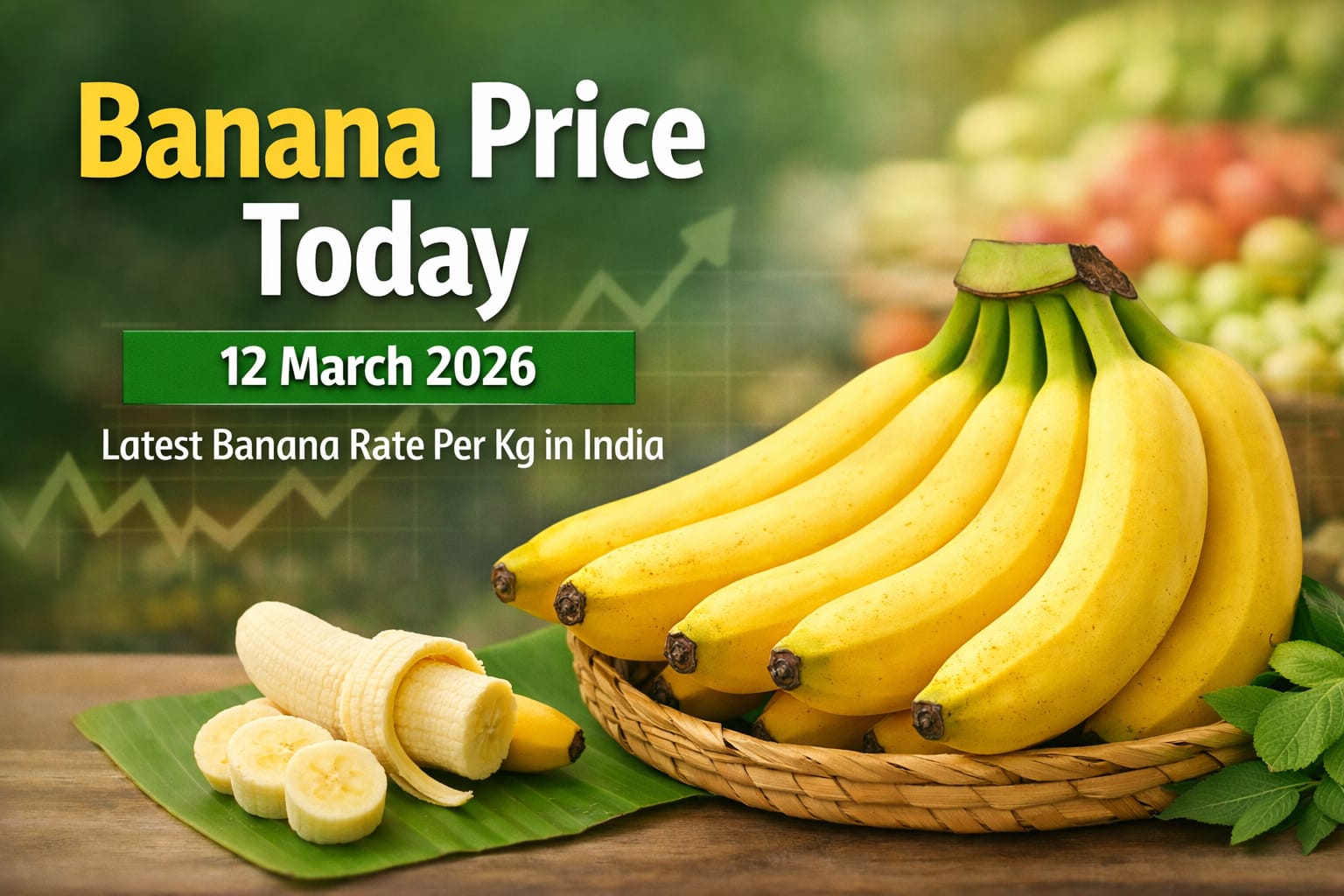
The Indian banana market is currently navigating a period of extreme volatility. While the supply of high-quality fruit is abundant, the logistical chain for international trade has faced a massive bottleneck. On March 12, 2026, the discrepancy between “farm-gate” prices (what the farmer receives) and “retail” prices (what the consumer pays) has widened significantly across major producing states like Karnataka, Maharashtra, and Tamil Nadu.
The primary driver for this shift is not a crop failure, but rather a surplus. Due to rising freight costs and conflict-related shipping delays in West Asia, thousands of tonnes of export-grade bananas are being diverted back into the domestic Indian market. This has created a “buyer’s market” at the wholesale level, though logistics costs keep city prices stable.
Banana Price Today: State-Wise Wholesale Rates (Per Kg)
| State | Primary Variety | Wholesale Rate (Avg) | Retail Price Range |
| Karnataka | Robusta / Yelakki | ₹30.00 | ₹45 – ₹80 |
| Maharashtra | Grand Nain | ₹11.00 | ₹35 – ₹50 |
| Tamil Nadu | Nendran / Poovan | ₹08.00 | ₹25 – ₹45 |
| Kerala | Nendran | ₹28.00 | ₹40 – ₹60 |
| Andhra Pradesh | Robusta | ₹18.00 | ₹35 – ₹50 |
The Export Crisis: Impact on Local Markets
The sudden drop in prices, especially in the Jalgaon (Maharashtra) and Erode (Tamil Nadu) belts, is directly linked to the Middle East export corridor. Currently, freight charges for a single container have spiked to nearly $10,000. This has made it financially unviable for many exporters to send fruit to Iran, Iraq, and the UAE.
When export-quality fruit—which usually commands a premium—is dumped into local mandis, the price of local varieties naturally collapses. In Tamil Nadu, the Nendran variety, often used for chips and traditional dishes, has seen wholesale prices dip to a staggering ₹5–₹10/kg in certain rural pockets.
Retail vs. Wholesale: The Price Gap for Consumers
Despite the crash in wholesale markets, urban consumers in cities like Bengaluru, Mumbai, and Delhi might not see an immediate 50% drop in their grocery bills. This is due to the “Last Mile” cost factor.
| Cost Component | Impact on Final Price |
| Transportation | High fuel costs keep transport expensive. |
| Wastage | 15–20% of bananas spoil during transit. |
| Intermediaries | Multiple agents between farm and shop. |
| Retail Rent | High overheads for supermarkets and vendors. |
Variety-Specific Price Breakdown
Not all bananas are priced equally. Premium varieties like the Yelakki (Cardamom Banana) in Karnataka remain relatively expensive because their production is localized and they have a dedicated niche market that is less affected by the export of larger Robusta varieties.
| Variety Name | Key Features | Current Market Sentiment |
| Robusta | Large, sweet, common | Over-supplied; Prices Low |
| Nendran | Cooking banana, firm | Distress sale in TN/Kerala |
| Yelakki | Small, very sweet | Stable; High Demand |
| Grand Nain | Export quality | High supply; Prices Dropping |
Future Outlook: Will Prices Recover?
Market analysts suggest that the current price slump may continue for the next 2–3 weeks unless export routes stabilize. For the Indian consumer, this is an excellent time to purchase bananas, which remain one of the most affordable and nutrient-dense fruits available. However, for the farming community, the focus is now on government intervention and the potential for increased domestic processing (such as banana powder or chips) to offset the loss of international trade.
Conclusion
Keeping an eye on daily market shifts is essential for both savvy shoppers and traders during this volatile period. While the export crisis has brought challenges to our farmers, it ensures an abundant supply of high-quality fruit for local households. Stay tuned for further updates as the market reacts to global shipping changes.