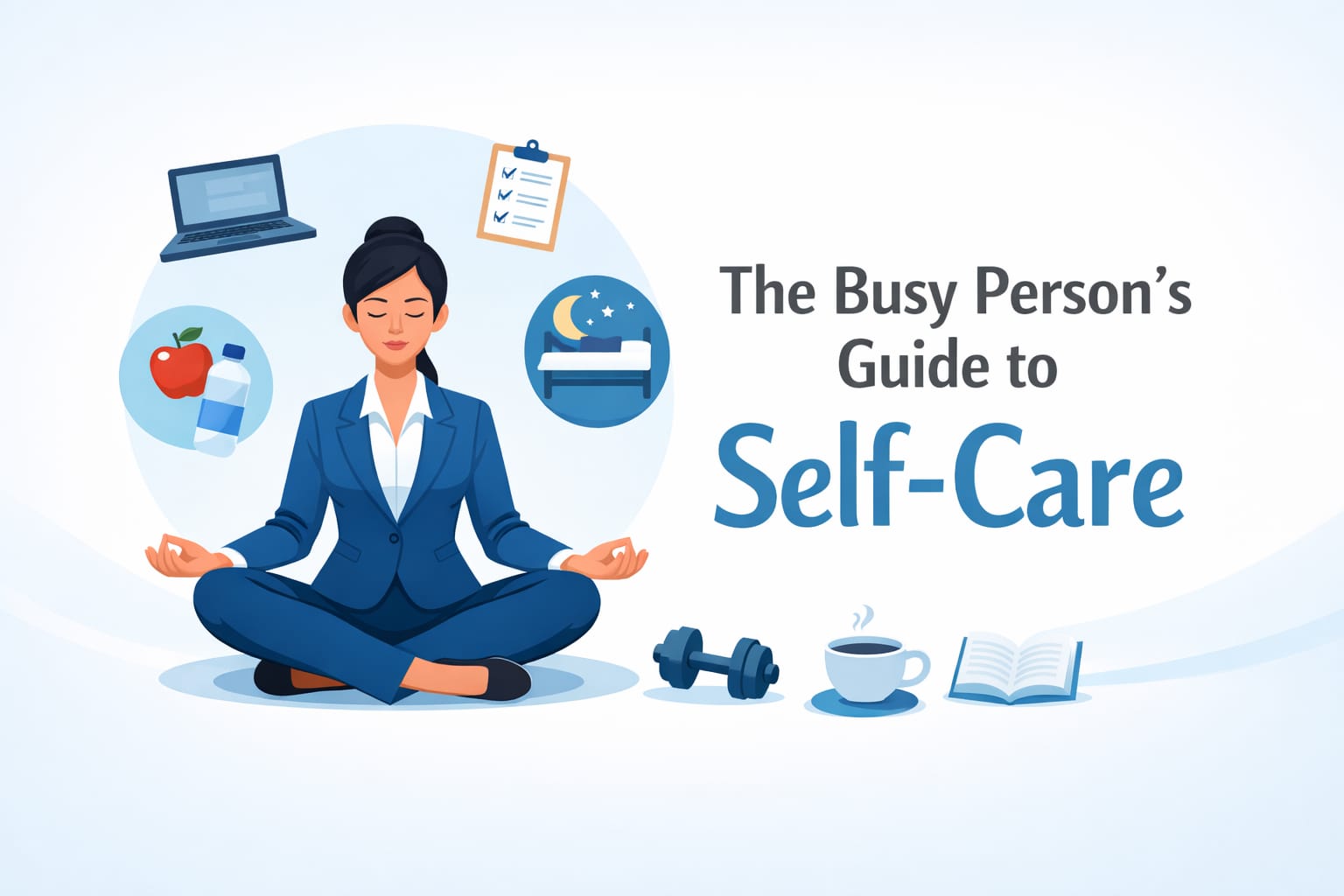
Finding time for yourself shouldn’t feel like an impossible chore on your to-do list. For the modern high-achiever, traditional self-care often feels impractical. This guide shifts the focus toward sustainable, high-impact micro-habits that fit into your busiest days, ensuring you stay energized, focused, and completely burnout-proof.
The Science of Micro-Rest
In 2026, the concept of “grind culture” has evolved into “optimized performance.” Science shows that the human brain isn’t designed for eight hours of linear focus. Instead, it operates best in pulses. Self-care, in this context, is the act of managing these pulses.
By implementing the 20-20-20 rule and Box Breathing, you aren’t just “relaxing”—you are lowering your heart rate variability (HRV) and clearing metabolic waste from your prefrontal cortex. This allows for sustained E-E-A-T (Experience, Expertise, Authoritativeness, and Trustworthiness) in your professional output.
| Technique | Method | Benefit |
| 20-20-20 Rule | Look 20ft away for 20s every 20m | Reduces ocular strain and headaches |
| Box Breathing | 4s Inhale / 4s Hold / 4s Exhale / 4s Hold | Resets the nervous system instantly |
| The Brain Dump | Write all tasks down before bed | Clears “open loops” for better sleep |
Physicality for the Time-Poor
Physical health is the foundation of mental performance. If your schedule doesn’t allow for an hour at the gym, you must pivot to “Movement Snacking.” These are short, high-intensity bursts of activity that trigger the release of endorphins and BDNF (Brain-Derived Neurotrophic Factor), which supports cognitive flexibility.

Furthermore, Circadian Anchoring is the most efficient way to manage your energy. Just ten minutes of sunlight in the morning sets a biological timer for melatonin production later that night. This ensures that even if you only get six hours of sleep, the quality of that sleep is restorative.
Movement & Nutrition Efficiency
| Category | Traditional Approach | The High-Efficiency Pivot |
| Exercise | 60-minute commute + gym | 10-minute “Movement Snacks” throughout the day |
| Sunlight | Occasional weekend outdoors | 10 minutes of morning light (Circadian Anchor) |
| Hydration | Drinking water when thirsty | Scheduled 250ml intake every 90 minutes |
| Fuel | Complex, multi-course meals | Nutritional “Bio-Hacks” (High-protein, low-prep) |
Digital Hygiene and Boundaries
For those managing digital platforms or remote teams, the “always-on” nature of the internet is the primary driver of burnout. Effective self-care requires creating an “Analog Sanctuary.” This means using technology to gatekeep your peace.
Utilizing Focus Modes isn’t just a productivity hack; it’s a mental health necessity. By silencing non-essential notifications, you prevent the constant “context switching” that drains your mental battery. Setting a hard boundary for blue light exposure 30 minutes before sleep is the difference between waking up “wired and tired” or genuinely refreshed.
The Digital Boundaries Checklist
- Focus Modes: Automated triggers based on time or location.
- Notification Audit: Disable all non-human alerts (likes, shares, news pings).
- Analog Buffer: No screens for the first and last 30 minutes of the day.
- Batching: Check emails and messages only at three designated times daily.
Ruthless Essentialism in Practice
Self-care is often the courage to say “no.” Every time you agree to a low-value meeting or a social obligation you don’t enjoy, you are stealing time from your own recovery. Ruthless essentialism is about identifying the 20% of activities that provide 80% of your results and happiness.
Automating “low-stakes” decisions is another form of self-care. By removing the need to choose what to wear or what to eat for lunch, you preserve your cognitive energy for the complex problem-solving required in your career and creative projects.
| Decision Type | Automation Strategy | Result |
| Meal Planning | Batch prep or subscription service | 5+ hours saved per week |
| Wardrobe | Daily “uniform” or pre-set outfits | Zero morning decision fatigue |
| Social Life | The “Hell Yes” or “No” rule | Higher quality social interactions |
| Admin Tasks | Recurring digital reminders | Reduced mental load |
The “Audit” of Modern Wellness
To truly master the “Busy Person’s Guide,” you must periodically audit your habits. Wellness isn’t a destination; it’s a shifting baseline. If you find yourself scrolling mindlessly for thirty minutes, that is a sign that your brain is seeking a “cheap” dopamine hit because it’s too exhausted for high-quality rest. Recognize these signs early to pivot back to intentional recovery.
Embracing self-care as a high-performer means trading guilt for strategy. By integrating these small, science-backed shifts into your daily workflow, you protect your most valuable asset: your mind. Start today with just one micro-habit, and watch as your productivity and personal well-being reach new, sustainable heights.