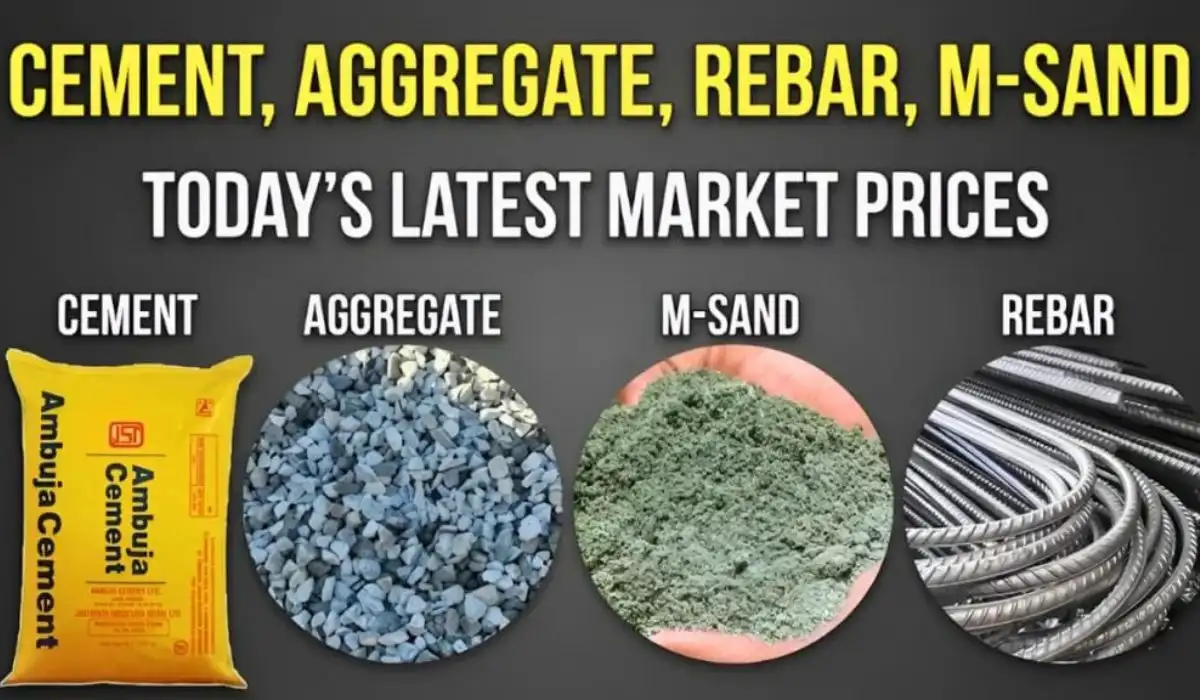
India’s construction sector has entered 2026 on a cautiously positive note as prices of two key building materials—cement and sariya (steel reinforcement bars)—have shown signs of moderation after prolonged volatility over the past two years. The easing of prices is expected to provide temporary cost relief to builders, contractors, and individual homebuilders, particularly ahead of the peak construction season.
Cement Prices in 2026: Stable With Localised Variations
Cement prices across India have largely stabilised in early 2026, following mild corrections seen in the last quarter of 2025. Market assessments from dealers and transporters indicate that the average retail price of a 50-kg cement bag currently ranges between ₹290 and ₹370, depending on region, brand, and logistics costs.
- South and East India: Prices remain relatively lower due to higher production capacity and competitive markets.
- North and West India: Prices are slightly higher, influenced by freight costs and demand from infrastructure projects.
Industry experts note that while some manufacturers attempted price hikes towards the end of 2025, intense competition and inventory pressure prevented sustained increases. As a result, cement prices have remained largely consumer-friendly entering 2026.

Sariya (TMT Steel) Prices: Firm but Off Recent Highs
In contrast to cement, sariya prices remain firm, though still below their historical peaks. As of January 2026, TMT steel bar prices generally range from ₹56,000 to ₹73,000 per tonne, depending on brand quality, steel grade, and city.
- Premium branded TMT bars are priced at the higher end of the range.
- Secondary and regional brands are available at relatively lower rates.
Steel prices continue to be influenced by raw material costs, power tariffs, and transportation expenses, along with steady demand from housing and government infrastructure projects.
Key Reasons Behind the Price Movement
1. GST Reduction on Construction Materials
The reduction in GST on cement from 28% to 18% has played a significant role in easing cost pressure. Although the full benefit has not been uniformly passed on to consumers, it has helped prevent sharp price increases and improved affordability.

2. Seasonal Demand Patterns
Construction activity typically slows during winter and early monsoon months. The price softness seen in early 2026 reflects this seasonal trend, with suppliers adjusting rates to clear inventories before demand picks up.
3. Supply and Capacity Expansion
India’s cement and steel sectors have witnessed capacity additions over the past few years. Increased availability has limited producers’ ability to aggressively raise prices, especially in highly competitive regional markets.
4. Input Cost and Logistics Factors
Fuel prices, freight charges, and state-level mineral levies continue to affect production costs. These factors explain why prices vary significantly from one city to another.

What This Means for Consumers and Builders
For Homebuilders
The current pricing environment presents a window of opportunity for individuals planning house construction. Locking in cement purchases now may result in moderate savings before demand rises later in the year.
For Contractors and Developers
While cement costs offer some relief, steel prices remain a budgeting challenge. Bulk procurement and phased purchasing strategies are increasingly being adopted to manage cost fluctuations.
For the Real Estate Sector
Moderating material costs may support housing affordability, particularly in the affordable and mid-income segments, though land and labour costs remain key pressure points.
Indicative Price Snapshot
| Material | Typical Price Range |
|---|---|
| Cement (50 kg bag) | ₹290 – ₹370 |
| Sariya / TMT Steel (per tonne) | ₹56,000 – ₹73,000 |
Prices vary by city, brand, transport distance, and local taxes.
Outlook for 2026
Industry analysts expect cement prices to remain largely stable in the first half of 2026, with the possibility of marginal increases if demand strengthens during the pre-monsoon and festive construction periods. Steel prices may continue to fluctuate within a narrow band, driven by infrastructure spending and global commodity trends.
Bottom Line
Early 2026 offers measured cost relief for construction activity in India. While this may not signal a long-term price decline, it does provide builders and homeowners a chance to optimise construction budgets through timely procurement and market monitoring.