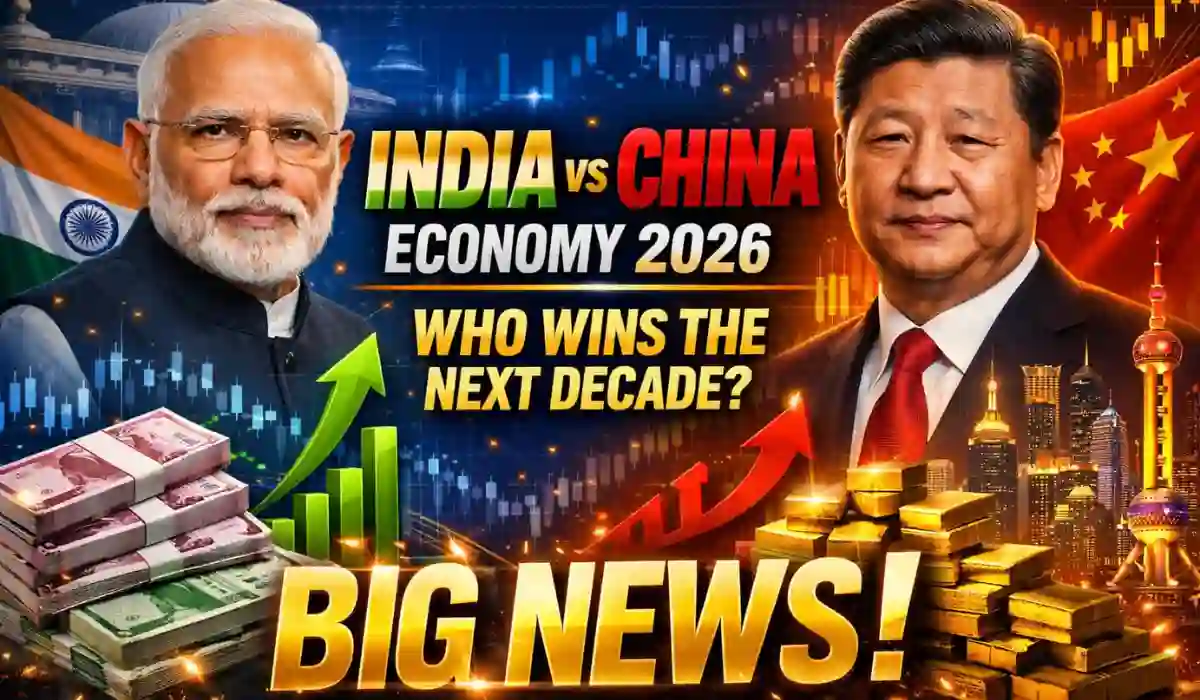
As the world steps deeper into 2026, global attention is firmly fixed on two Asian giants shaping the future of growth, trade, and opportunity. India and China are no longer just emerging economies; they are central pillars of the global system influencing markets, jobs, and innovation worldwide.
For investors, policymakers, and everyday readers alike, understanding this economic rivalry is not about choosing sides. It is about recognizing where opportunities will emerge, how risks will evolve, and which nation’s growth story will define the next decade of global progress and prosperity.
China’s Economic Scale Still Sets the Global Benchmark
China enters 2026 as the world’s second-largest economy, built on decades of industrial expansion, export dominance, and infrastructure investment. Its vast manufacturing ecosystem continues to supply everything from electronics to renewable energy equipment across continents.

Despite slower growth compared to earlier decades, China’s economy remains enormously influential. Even modest growth percentages translate into trillions of dollars in new output, giving Beijing significant leverage in global trade, finance, and geopolitical negotiations.
India’s Growth Momentum Is Turning Global Heads
India stands at a very different, yet equally powerful, stage of economic evolution. With strong domestic demand, rapid digital adoption, and consistent policy reforms, India is one of the fastest-growing major economies entering 2026.
This growth is not limited to a single sector. Services, manufacturing, startups, and infrastructure are expanding together, creating a more balanced and resilient economic foundation that excites global investors and multinational corporations alike.

Demographics: The Silent Force Driving the Next Decade
One of the most decisive differences between India and China lies in demographics. China’s population is aging rapidly, shrinking the workforce and increasing pressure on social systems and productivity growth.
India, on the other hand, benefits from a young and expanding working-age population. This demographic advantage fuels consumption, entrepreneurship, and long-term economic potential, provided skills, education, and employment opportunities keep pace with population growth.
Manufacturing, Supply Chains, and the Global Shift
China remains the world’s manufacturing backbone, with unmatched scale, logistics efficiency, and supplier networks. However, rising costs and geopolitical tensions are encouraging companies to diversify production bases.

India is emerging as a key beneficiary of this shift. Government incentives, improved infrastructure, and global partnerships are slowly positioning India as an alternative manufacturing hub, particularly in electronics, automobiles, and renewable energy components.
Technology, Innovation, and the Race for the Future
Both nations view technology as central to economic leadership. China continues to invest heavily in artificial intelligence, electric vehicles, and advanced manufacturing, aiming to move higher up the global value chain.
India’s strength lies in digital services, software, fintech, and startup innovation. A thriving tech ecosystem, supported by a massive user base, allows India to scale digital solutions rapidly and export innovation-driven services worldwide.
Key Strengths and Challenges at a Glance
While both economies are powerful, their paths forward differ in structure and risk. Understanding these contrasts helps readers see the bigger picture clearly.
- China’s strengths include deep manufacturing capacity, strong export networks, and advanced infrastructure
- China’s challenges include aging population, property sector stress, and weaker domestic consumption
- India’s strengths include young workforce, fast growth, and rising global integration
- India’s challenges include job creation scale, skill development, and infrastructure execution
Global Influence and Strategic Positioning
China’s economic size gives it strong influence over global supply chains, commodity markets, and developing economies. Its financial and trade relationships remain deeply embedded across Asia, Africa, and Europe.
India’s global role is expanding through strategic partnerships, trade agreements, and diplomatic engagement. As a trusted growth partner for many nations, India’s influence is rising steadily, especially in technology services and emerging market cooperation.
Who Wins the Next Decade? The Realistic Answer
The question of who “wins” the next decade depends on perspective. China is likely to remain the larger economy, with unmatched industrial scale and global reach through the early 2030s.
India, however, is positioned to grow faster, narrow income gaps, and significantly expand its share of global output. For the world, this is not a zero-sum contest but a dual-engine growth story reshaping the global economic order.
Conclusion
As 2026 unfolds, the India versus China economic narrative is less about rivalry and more about transformation. Each country brings unique strengths, faces distinct challenges, and contributes differently to global progress.
For readers, investors, and global citizens, the smartest outlook is balanced optimism. China’s scale and India’s momentum together will shape the next decade, offering opportunities, lessons, and growth that extend far beyond national borders.