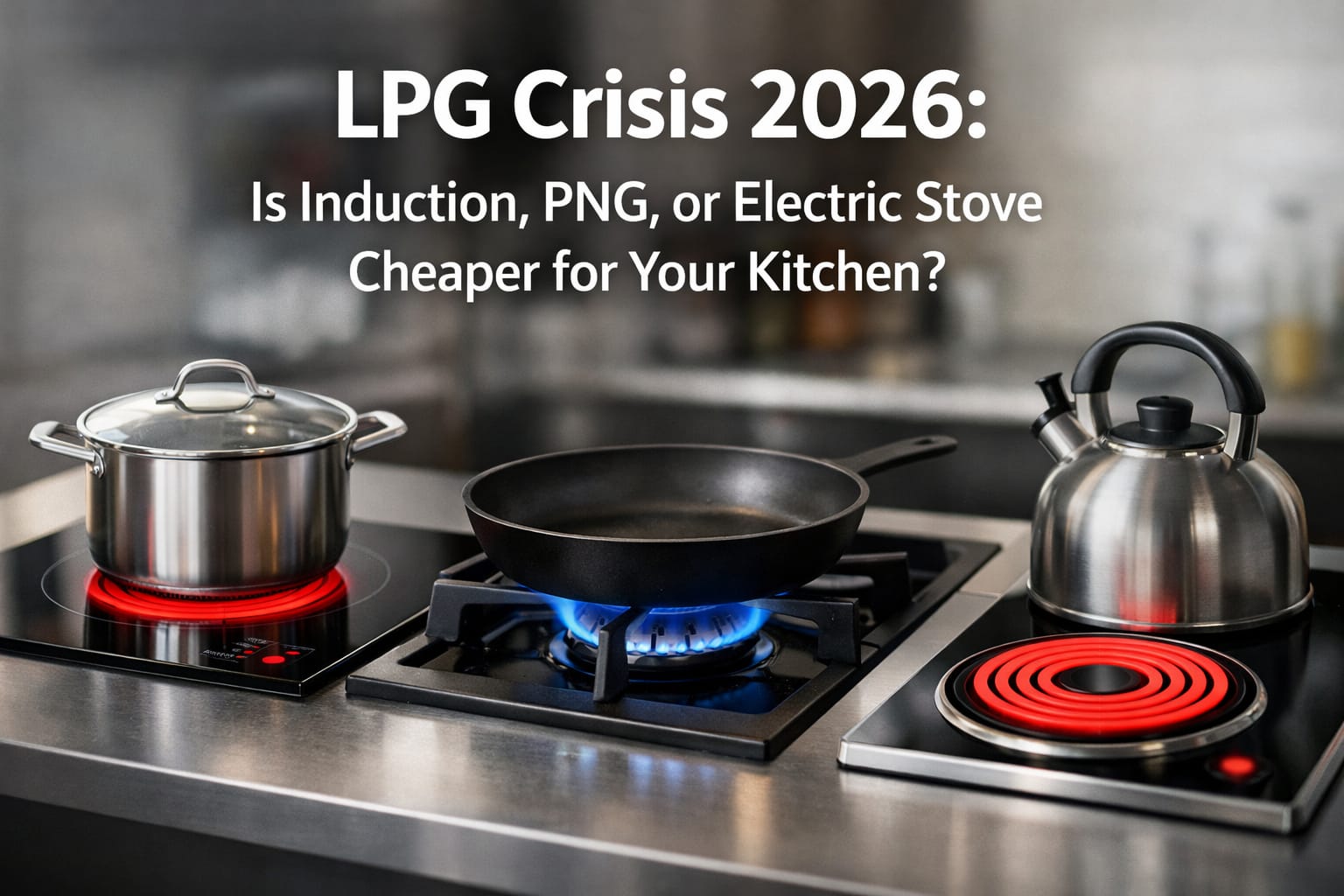
Navigating a kitchen during an LPG crisis can be stressful, but it is also the perfect time to upgrade to more efficient technology. Whether you are looking to slash your monthly utility bills or simply want a backup that never runs out, understanding your options is the first step. Let’s explore the best alternatives to keep your meals cooking smoothly without relying on a heavy cylinder.
Comparing Performance and Cost
| Feature | Induction Cooktop | Piped Natural Gas (PNG) | Electric Hot Plate |
| Energy Efficiency | ~90% (Highest) | ~60% (Moderate) | ~50% (Lowest) |
| Monthly Cost | Low (Electricity dependent) | Lowest (Cheapest fuel) | High (Heavy consumption) |
| Safety Level | Cool-to-touch surface | Standard gas safety | High heat risk |
| Heat Control | Precise & Instant | Analog/Manual | Slow adjustment |
Deep Dive: Why Induction is the Modern Standard
Induction cooking has revolutionized the kitchen by moving away from thermal conduction to electromagnetism. Because the heat is generated directly inside the pot, your kitchen stays cooler and your food cooks nearly twice as fast as on a traditional flame. It is the gold standard for those who prioritize safety, as the glass top does not get “red hot,” significantly reducing the risk of accidental burns or kitchen fires.
The Logistics of Switching to PNG
Piped Natural Gas (PNG) offers a “set it and forget it” experience that LPG users often envy. Once the infrastructure is installed in your building, you no longer have to worry about booking refills or dealing with the weight of heavy metal cylinders. From a financial perspective, PNG is a long-term winner; it is typically priced lower than LPG and is billed based on actual consumption, ensuring you only pay for what you use.

Understanding the Versatility of Electric Coils
While they may seem old-fashioned, electric coil stoves and infrared hot plates remain a vital backup due to their “universal” nature. Unlike induction, which requires specific magnetic-bottomed pans, an electric coil will heat anything from a traditional clay pot to an aluminum pressure cooker. For households not ready to invest in a completely new set of cookware, a high-quality electric plate serves as the most accessible entry point during an emergency.
Cookware and Installation Requirements
| Requirement | Induction | PNG | Electric Coil |
| Cookware Material | Stainless Steel / Cast Iron | Any (Aluminum, Copper, etc.) | Any (Flat bottom preferred) |
| Installation | Plug into 15A Socket | Professional Pipeline required | Standard Power Outlet |
| Maintenance | Low (Wipe-clean glass) | Periodic pipe inspections | High (Coils wear out) |
Optimizing Your Kitchen for Energy Savings
Switching your fuel source is only half the battle; how you cook matters just as much. To maximize the benefits of an Induction cooktop, always use lids to trap heat and ensure your pans match the size of the heating zone. If you are using PNG, ensuring your burners are clean will maintain a blue, efficient flame. These small habits, combined with the right technology, can reduce your overall energy footprint by up to 20% annually.
Future-Proofing Against Fuel Volatility
The energy landscape is shifting toward electrification, making Induction a very “future-proof” investment. As renewable energy becomes more integrated into the power grid, cooking with electricity becomes a greener choice compared to fossil fuels. By diversifying your kitchen with at least two of these methods—such as a primary PNG connection and a backup Induction plate—you ensure that your household remains functional regardless of global fuel market fluctuations or local supply chain issues.

The Final Verdict: Which Fits Your Lifestyle?
Selecting the right alternative depends heavily on your existing kitchen setup and your budget for new utensils. If you are starting from scratch in a modern apartment, the combination of PNG for heavy cooking and Induction for quick tasks offers the ultimate balance of economy and speed. However, for those in rural areas or temporary housing, the portability and low cost of an electric plate provide immediate relief during a cylinder shortage.
Conclusion
Making the switch from LPG to Induction, PNG, or Electric is a smart move for your wallet and your peace of mind. By choosing a method that fits your daily cooking habits, you can stop worrying about cylinder bookings and start enjoying a faster, safer kitchen experience. Evaluate your options today and take control of your home’s energy future!