The government has officially introduced the new Ration Card Rules 2025, marking one of the biggest welfare upgrades in recent years. Under the revised framework, every eligible ration card holder will receive ₹1000 monthly financial assistance, directly credited to their bank accounts. This move aims to strengthen the social security network for low-income families who depend on subsidized food grains and cash support for household expenses.
Officials highlighted that the new rules come as part of the government’s broader mission to enhance direct benefit transfer (DBT) accessibility and minimize leakages in subsidy distribution. By linking benefits directly to Aadhaar-verified beneficiaries, the system is expected to offer transparent and faster delivery of assistance across states.
Objective Behind the New Financial Assistance Scheme

One of the primary goals of the revised guidelines is to ensure that vulnerable families receive consistent monthly financial support, especially amid rising inflation and cost-of-living challenges. According to authorities, the ₹1000 monthly assistance will help households manage essential purchases beyond rationed supplies, such as vegetables, medicines, and utility bills.
The government believes the updated scheme will improve nutritional security, reduce financial stress, and bring uniformity in welfare distribution across rural and urban regions. With the implementation of digital verification and automated payments, the scheme aims to eliminate discrepancies and strengthen public welfare governance.
Categories of Ration Card Holders Eligible Under New Rules
The new guidelines confirm that APL, BPL, AAY, and Priority Household card holders will fall under the updated benefit structure. This means the scheme will cover a large segment of the population, including families already receiving subsidized food grains under the National Food Security Act (NFSA).
However, government officials clarified that certain criteria—such as valid Aadhaar, active bank account, and updated family details—must be fulfilled to continue receiving the monthly assistance. Beneficiaries who fail to update their details within the stipulated time may face temporary benefit suspension.

How the ₹1000 Monthly Assistance Will Be Deposited
The monthly assistance will be transferred via the Direct Benefit Transfer (DBT) system to ensure quick and secure disbursement. Each month, the sanctioned amount of ₹1000 will directly reach the primary account holder linked with the ration card. This mechanism not only improves transparency but also reduces the dependency on offline verification.
The DBT-enabled structure also ensures that beneficiaries receive their financial support without any middlemen involvement. State governments will publish monthly DBT status updates, allowing card holders to check the status of their ₹1000 transaction through online portals or mobile apps.
Key Highlights
| Feature | Details |
|---|---|
| Monthly Assistance | ₹1000 for every eligible ration card holder |
| Mode of Transfer | Direct Benefit Transfer (DBT) |
| Beneficiary Categories | APL, BPL, AAY, Priority Households |
| ID Requirements | Aadhaar-linked bank account mandatory |
| Implementation Year | 2025 |
| Verification Deadline | To be announced by state departments |
Mandatory Aadhaar Linkage for All Ration Cards
Under the updated norms, Aadhaar linkage has been made compulsory for every card holder. This ensures that only legitimate and active beneficiaries continue to receive monthly funds. Aadhaar authentication will also prevent duplication of ration cards belonging to the same household or individual.

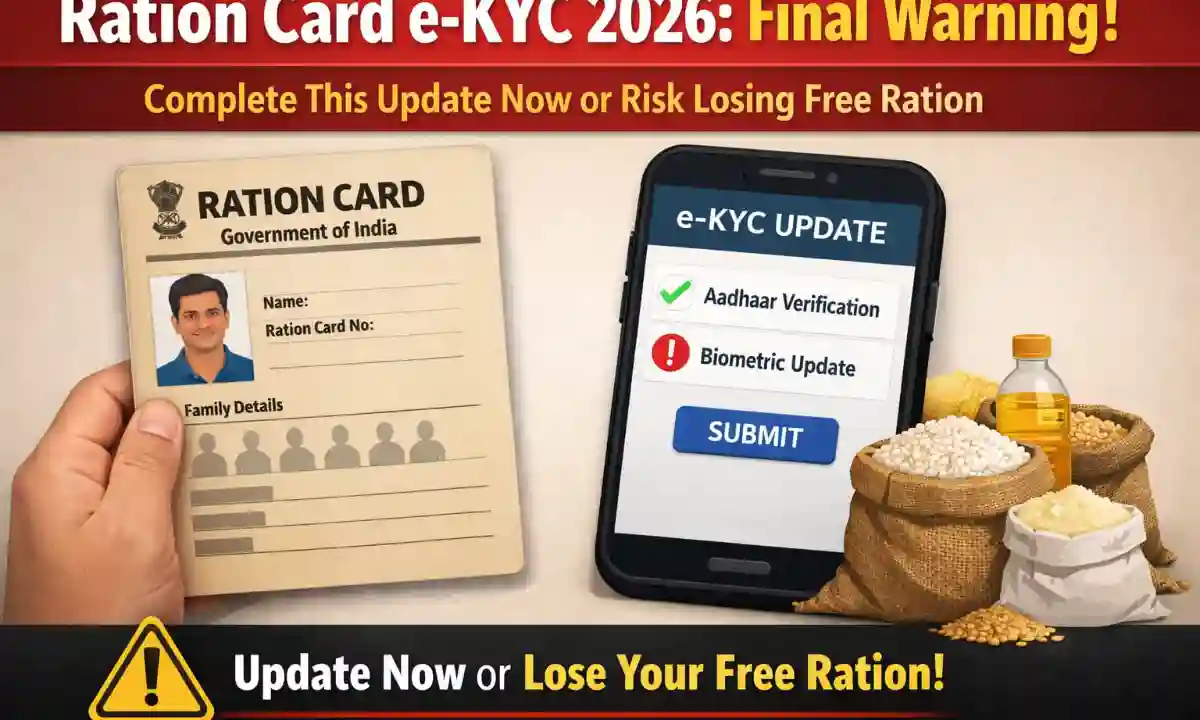
Authorities have urged citizens to complete Aadhaar seeding at the nearest fair price shop, CSC center, or online state ration portal. Failure to complete biometric verification within the deadline may result in temporary deactivation of both ration and DBT benefits.
Digitization and Updated e-Ration Card System
To support the new policy, the government has strengthened the e-Ration Card portal and mobile app ecosystem. Citizens can now access their card details, update family information, and track DBT transfers online. This digital upgrade ensures faster service delivery and reduces dependency on physical visits.
The digitized interface also allows beneficiaries to download the digital ration card, view entitlements, and raise complaints regarding omissions or delays. With real-time data synchronization, states can now monitor ration distribution and DBT benefits more efficiently.
Impact on Low-Income Families and Rural Households
Experts state that the monthly assistance of ₹1000 will significantly uplift families living below the poverty line, especially in rural regions where employment opportunities may fluctuate seasonally. The additional cash support will help households purchase nutritious food, manage emergencies, and plan essential expenses better.
The government expects that the financial boost will also reduce reliance on informal borrowing, which often traps families in debt cycles. Rural development officers believe the new welfare measures will create a more stable economic environment for low-income communities.
How to Check Eligibility and Enrollment Status
Beneficiaries can check their eligibility for the updated ₹1000 assistance through official state food and civil supplies portals. Users must enter their ration card number, mobile number, and Aadhaar-linked bank details to verify their status. Mobile OTP verification ensures security during the process.
State officials will also send SMS notifications confirming monthly transfers. Beneficiaries may use government sites or the Public Distribution System (PDS) app to track their DBT history and resolve any payment-related issues.
Government’s Long-term Plan for Welfare Enhancement
The Ration Card New Rules 2025 are part of a broader plan to digitize welfare and reduce fraud within public distribution. Over time, the government intends to integrate health insurance benefits, social security schemes, and nutritional grants with the ration card system.
Officials indicate that a unified welfare database will help identify genuinely needy families and ensure they receive timely financial support without bureaucratic delays. This approach aligns with the goal of building a robust, technology-driven welfare ecosystem.
Possible Future Additions Under the Scheme
Analysts speculate that the government may introduce additional subsidies for essential household items, such as cooking oil and pulses, under the revised framework. Moreover, discussions are ongoing about increasing the monthly assistance beyond ₹1000 for vulnerable categories like senior citizens and differently-abled individuals.
State governments also plan to introduce QR-based smart ration cards to further strengthen digital transactions and verification processes. If approved, these upgrades may be rolled out in a phased manner starting late 2025.
FAQs
1. Who is eligible for the ₹1000 monthly assistance under the new rules?
All eligible ration card holders including APL, BPL, AAY, and Priority Household families can receive the ₹1000 monthly benefit, provided their Aadhaar and bank account are linked to the ration card.
2. How will the ₹1000 assistance be credited?
The amount will be transferred every month via Direct Benefit Transfer (DBT) directly into the beneficiary’s Aadhaar-linked bank account.
3. Is Aadhaar linkage mandatory to receive the benefit?
Yes. As per the Ration Card New Rules 2025, Aadhaar verification is compulsory for all card holders to continue receiving both ration and DBT benefits.
4. How can I check whether my benefit has been deposited?
You can check your payment status through the state food department’s portal, the PDS mobile app, or by verifying your bank statement or SMS alerts.