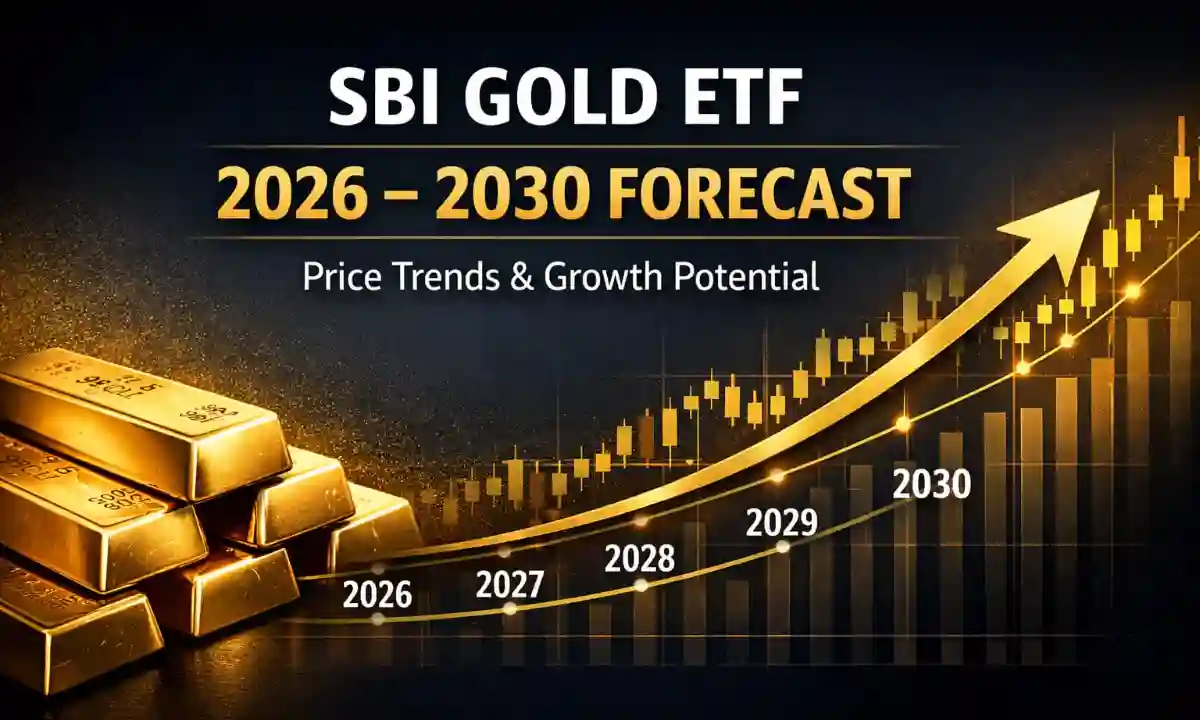
Investing in gold through exchange-traded funds (ETFs) has become increasingly popular in India as investors look for exposure to gold’s price movements without holding physical bullion. Among these, a gold ETF offered by the State Bank of India (SBI) is often chosen for its low cost, liquidity, and trust in the issuer. As we move deeper into 2026, long-term investors are asking: What can SBI Gold ETF deliver through 2030?
This forecast explores price drivers, growth expectations, risks, and realistic returns for investors considering gold ETFs over the next few years.
Why Gold and Gold ETFs Matter Now
Gold has historically served as a hedge against inflation, currency weakness, and economic uncertainty. With global monetary policy still fluid and occasional market volatility, gold ETFs continue to be part of diversified portfolios.

Gold ETFs track international gold prices closely. When gold prices rise, the value of ETF units rises too. Investors benefit from price movement without needing to store physical gold.
Price Trend Drivers Through 2026–2030
1. Inflation and Monetary Policy
Gold tends to rally when inflation expectations remain elevated or when real interest rates are low. If inflation persists or central banks hold rates near neutral, gold prices could get support.
Implication: SBI Gold ETF may rise as gold prices appreciate in an inflationary environment.

2. Dollar Strength & Global Demand
Gold is priced in US dollars globally. A weaker dollar makes gold cheaper for foreign buyers, often pushing prices higher. Conversely, a strong dollar can pressure gold prices.
Implication: Macro trends in currency markets will strongly influence returns.
3. Safe-Haven Demand
Periods of geopolitical tension, financial stress, or slowing growth typically boost demand for gold as a risk-off asset.

Implication: Short-term price spikes could occur, benefiting ETF holders.
4. Indian Demand Patterns
India is one of the world’s largest consumers of gold — particularly for jewellery, festivals, and weddings. While physical demand doesn’t directly track ETFs, it signals broader investor confidence in gold as an asset.
Projected Growth Potential (2026–2030)
While no forecast can be guaranteed, long-term gold price models suggest steady underlying growth with periodic volatility. Based on historical trends and current macro indicators:
- Moderate Scenario (5–7% annualized): Gold prices grow steadily with low inflation and stable global growth. SBI Gold ETF returns may roughly track this range.
- Bullish Scenario (8–12% annualized): Rising inflation, safe-haven demand, and weaker dollar push gold prices higher. Investors benefit from stronger gains.
- Volatile Scenario: Short-term swings persist due to macro shocks, leading to choppy performance within an overall uptrend.
Bottom Line: Over a 4–5 year horizon, gold’s long-term return potential supports moderate growth for SBI Gold ETF, especially compared with cash or ultra-short fixed-income instruments.
Expected Returns in Numbers
| Scenario | Avg Annual Return | 5-Year Growth |
|---|---|---|
| Moderate | 6% | ~34% |
| Bullish | 10% | ~61% |
| Conservative | 4% | ~22% |
These figures illustrate broad possibilities, not guarantees. Actual returns will depend on how gold markets evolve.
Advantages of SBI Gold ETF for Long-Term Investors
- Low Cost: Lower expense ratios than many actively managed options
- Liquidity: Can be bought and sold like shares during market hours
- Safety: No need to store physical gold
- Transparency: ETF price tracks international gold closely
For SIP investors, regular purchases can average cost over time and reduce timing risk.
Risks to Consider
Despite its appeal, gold investing carries risks:
- No Yield: Gold does not pay dividends or interest.
- Volatility: Prices can swing sharply in short periods.
- Market Correlations: Unforeseen macro or policy shifts may impact returns.
Gold performs well as a hedge but may underperform in strong equity bull markets.
How to Approach SBI Gold ETF in Your Portfolio
Financial planners often suggest using gold as 5–15% of a diversified portfolio, depending on risk tolerance and goals. For long horizons (beyond five years):
- Combine SIP investing with lump sum buys during dips
- Monitor macro trends like real rates and currency moves
- Rebalance periodically to lock gains or adjust allocations
This disciplined approach helps manage risk and capture long-term growth.
Conclusion
Between 2026 and 2030, SBI Gold ETF is well positioned to benefit from gold’s traditional role as an inflation hedge and safe haven. While short-term volatility is likely, the long-term growth outlook remains positive under most scenarios.
Investors seeking inflation protection and portfolio balance can consider building or steadily increasing exposure to SBI Gold ETF — particularly with a clear time horizon and disciplined investing strategy.