
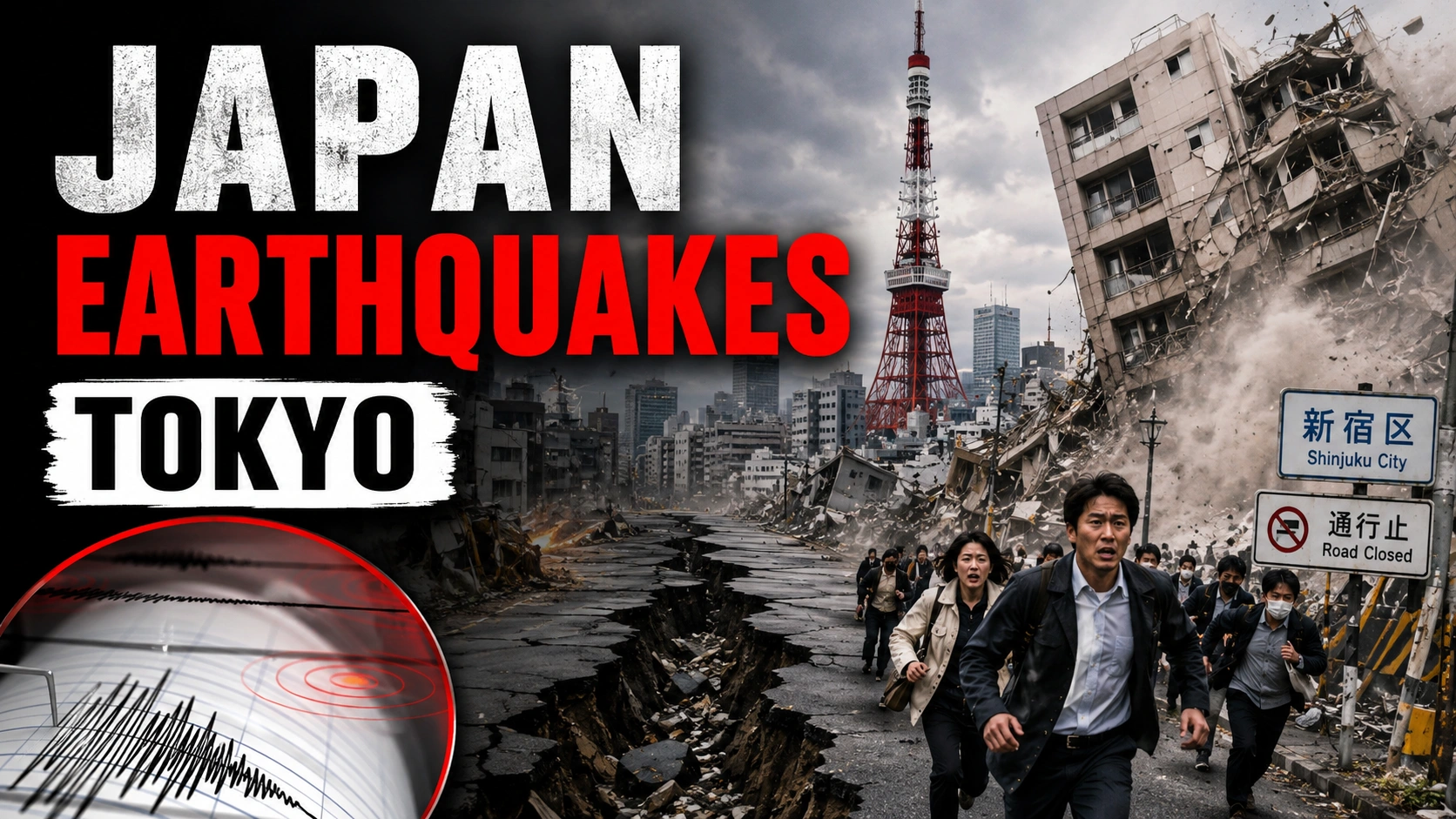
Living in Tokyo means getting used to the occasional shake, but waking up to a late-night quake is always a sharp reminder of where we live. With four tectonic plates grinding beneath our feet, understanding how Japan handles these tremors helps keep us safe, informed, and calm.
Why Tokyo Experiences Frequent Seismic Activity
Tokyo sits directly above a complex geological junction where the Pacific, Philippine Sea, Eurasian, and North American (Okhotsk) plates meet. As these massive rock slabs continuously shift, press, and grind against one another, stress builds up underground and periodically releases as seismic energy.
Recent Tremor Details: Ibaraki Earthquake
A magnitude 5.9 tremor recently centered in southern Ibaraki Prefecture at a depth of nearly 70 kilometers. The quake registered up to a Lower 5 on Japan’s seismic intensity scale in parts of the Kanto region, including Tokyo’s Adachi Ward.
- Minor Injuries & Damage: Shaking startled sleeping residents awake, resulting in minor injuries across Tokyo, Saitama, Kanagawa, Chiba, and Ibaraki.
- Infrastructure Updates: Local disruptions included localized power outages, train delays on express routes near Narita, and a ruptured water pipe in Tokyo’s Koto Ward.
- Safety Status: No tsunami warning was issued, and nearby nuclear power plants reported normal operations.
Long-Term Context & City Preparedness
| Aspect | Key Information |
| Kanto Region Tremors | Minor-to-moderate earthquakes occur routinely without causing major urban damage due to deep focal points. |
| Direct-Hit Prediction | Seismologists estimate a ~70% probability of a major M7.0+ earthquake directly striking the Tokyo region within 30 years. |
| Strict Building Codes | Advanced anti-seismic architecture (Shin-Taishin Kijun), deep structural dampers, and auto gas shut-off valves minimize modern urban risk. |
Emergency Alerts and Basic Safety Steps
Japan relies on the Early Earthquake Warning (Kinkyu Jishin Sokuho) system, which broadcasts loud alerts directly to mobile devices seconds before the primary shaking arrives.

When an alert sounds:
- Drop, Cover, and Hold: Get under a sturdy desk or table immediately.
- Protect Against Falling Items: Stay away from tall bookcases, unanchored cabinets, and glass windows.
- Stay Indoors: Wait inside until all shaking completely stops before heading outside to designated evacuation zones.
Whether you are a lifelong local resident or visiting the city for the very first time, staying informed makes all the difference during a quake. Keep your emergency alerts turned on, know your local evacuation path, and sleep easier knowing Tokyo is built with safety in mind.