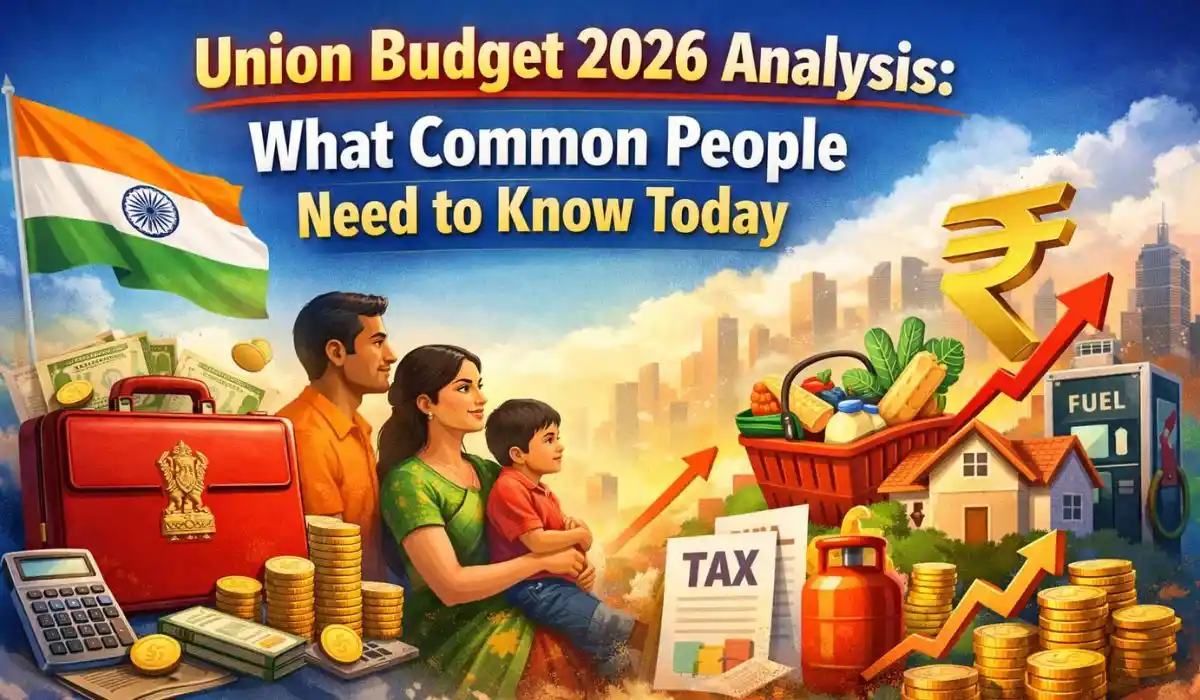
New Delhi | Feb 2, 2026 — The Union Budget 2026 has been presented with a clear focus on long-term economic stability, job creation, and infrastructure-led growth. While it does not deliver dramatic short-term relief through tax cuts, it sets the foundation for sustainable development that directly impacts households, workers, farmers, students, and small businesses across India.
This budget reflects a growth-first, stability-driven approach, prioritising employment, rural development, public infrastructure, digital transformation, and financial discipline — key pillars that shape the everyday life of common citizens.
A Budget Built on Economic Stability
The government has continued its path of fiscal consolidation while increasing capital expenditure on infrastructure. The strategy is clear:
invest in assets that create jobs today and prosperity tomorrow.

Instead of populist giveaways, the budget focuses on:
- Strong public investment
- Employment generation
- Rural and agricultural support
- Digital and future-ready skills
- MSME growth
- Healthcare and education strengthening
This approach signals economic maturity and long-term planning rather than short-term political relief.
What Common People Will Feel First
Cost of Living Relief (Indirect Impact)
There are no major tax hikes on essential goods and services, which helps control inflation pressure on daily household expenses like food, transport, and medicines. The focus on supply chain infrastructure and storage is aimed at reducing price volatility, especially for food items.

What this means:
Stable household expenses and better price control in the long run.
Income Tax: No Big Cuts, But Easier Life for Taxpayers
There are no major income tax slab changes, but important compliance reforms have been introduced:
- Simplified filing systems
- Faster refunds
- Digital automation of TDS and compliance
- Reduced procedural burden for salaried taxpayers and small businesses
Impact:
Less stress, less paperwork, and smoother tax processes — even without slab changes.

Jobs: The Core Focus of Budget 2026
Employment creation is the backbone of this budget.
Key Drivers:
- Infrastructure projects (roads, railways, housing, logistics)
- Manufacturing ecosystem support
- MSME funding and credit access
- Skill development programs
- Digital and AI-based training initiatives
Real-world effect:
More jobs for:
- Youth
- Semi-skilled workers
- Construction workers
- Technicians
- Digital professionals
- Rural workforce
This creates both direct employment and indirect job opportunities across sectors.
Farmers and Rural India: Structural Support, Not Freebies
The budget moves away from short-term subsidies and focuses on productivity:
- AI-based farming initiatives
- Irrigation and rural connectivity projects
- Digital agriculture platforms
- Market access improvements
- Storage and cold-chain infrastructure
Impact on farmers:
- Lower costs
- Better productivity
- Higher income stability
- Reduced dependency on middlemen
This is a system-level reform model, not temporary relief.
Infrastructure That Changes Daily Life
Massive investment in:
- Rail corridors
- Road networks
- Freight infrastructure
- Urban mobility
- Logistics hubs
- Smart connectivity systems
Why it matters to common people:
- Faster travel
- Better public transport
- Cheaper logistics
- More regional job creation
- Growth of tier-2 and tier-3 cities
Infrastructure spending directly translates into income generation and quality of life improvement.
Healthcare and Education: Silent but Powerful Reforms
Healthcare:
- Medical infrastructure expansion
- Training of healthcare workers
- Emergency services improvement
- Regional healthcare hubs
Education:
- Skill-based education models
- STEM focus
- Digital learning ecosystems
- Employment-aligned education programs
Impact on families:
- Lower medical stress
- Better education-job alignment
- Reduced future financial risks
MSMEs and Small Businesses: The Real Growth Engine
Support measures for small businesses include:
- Growth funds
- Easier compliance
- Digital platforms
- Credit access improvement
- Market linkage support
Result:
Local economies grow, family businesses expand, and self-employment opportunities increase — especially in semi-urban and rural India.
What the Budget Did NOT Do
- No major income tax slab relief
- No populist cash schemes
- No unsustainable subsidies
- No short-term political giveaways
This confirms the government’s long-term economic strategy over short-term popularity.
Expert Economic Perspective
Union Budget 2026 reflects a structural reform mindset, not a relief-budget mindset. It focuses on:
- Productivity over populism
- Investment over consumption
- Employment creation over subsidies
- Infrastructure over handouts
- Long-term income growth over short-term relief
This aligns with global economic best practices for developing economies.
Final Verdict for Common People
Union Budget 2026 is not a “feel-good” budget — it is a “future-secure” budget.
Short-term:
- No major financial relief
- No big tax cuts
- No immediate cash benefits
Long-term:
- More jobs
- Better income opportunities
- Stronger rural economy
- Better infrastructure
- Stable cost of living
- Stronger economic security for families
Bottom Line
This is a builder’s budget, not a giveaway budget.
It builds roads, skills, systems, jobs, and future income streams instead of temporary relief schemes.
For common people, the real benefit will come not in weeks or months, but over the next few years — through employment, income stability, and economic growth.