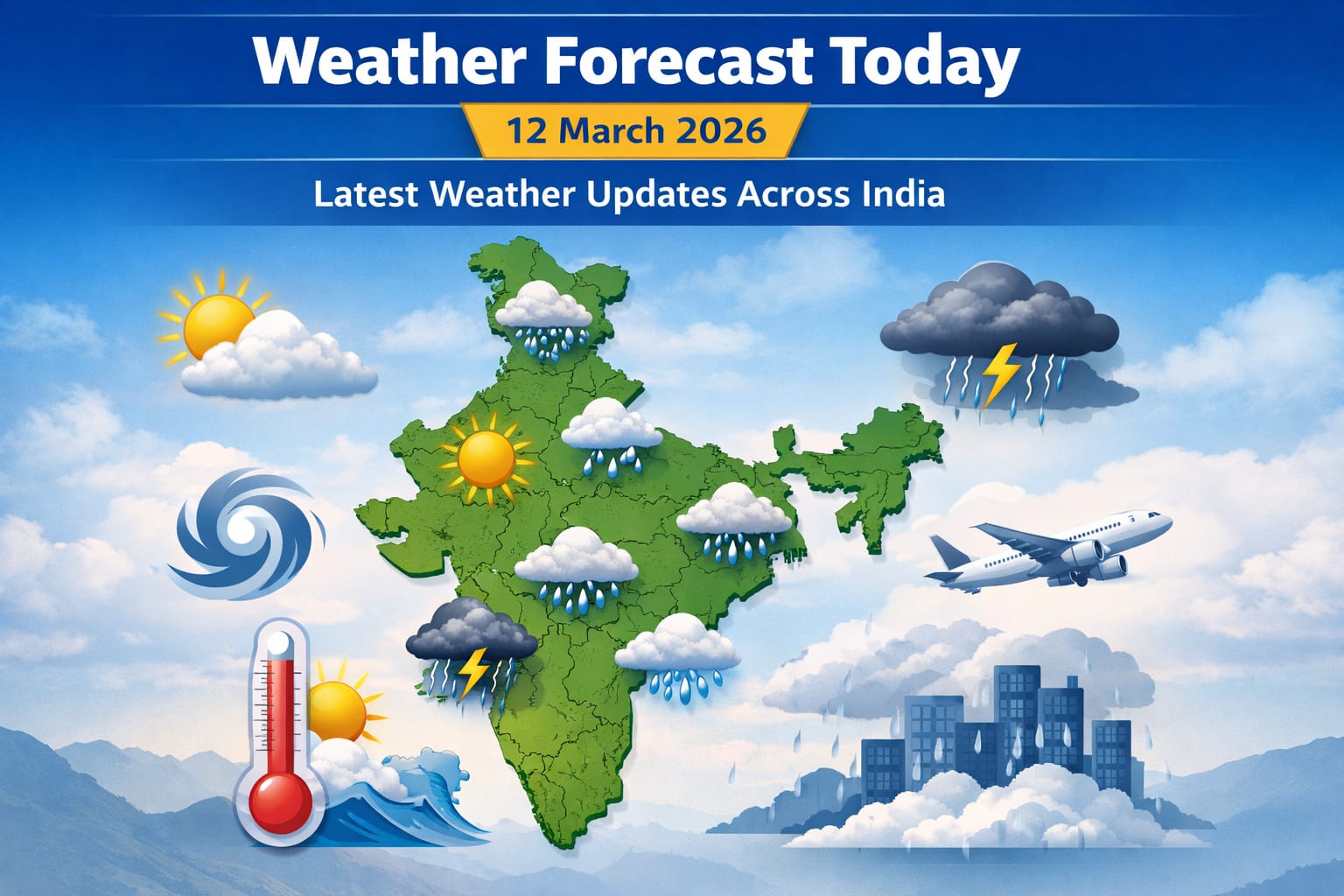
As the month of March progresses, the Indian subcontinent is witnessing a rapid transition into the summer season. Today, March 12, 2026, many states are bracing for an early heatwave, while certain northern pockets remain under the influence of western disturbances. Stay informed with our comprehensive regional weather breakdown.
National Weather Overview
The national average temperature is currently hovering around 32°C, but a significant spike is expected during the afternoon hours. Dry winds from the East are keeping humidity levels low at 22%, creating a “dry heat” sensation across the heart of the country.
| Parameter | Morning (9 AM) | Afternoon (2 PM) | Evening (8 PM) |
| Temperature | 28°C | 38°C | 26°C |
| Humidity | 35% | 18% | 25% |
| Sky Condition | Clear/Sunny | Harsh Sunlight | Clear |
| UV Index | 4 (Moderate) | 9 (Very High) | 1 (Low) |
Regional Temperature & Alerts
The India Meteorological Department (IMD) has highlighted specific zones where the mercury is expected to cross the normal threshold for this time of year.

North & West India
In North India, the influence of a weak Western Disturbance is keeping the heat in check for Jammu & Kashmir and Himachal Pradesh. However, the plains of Punjab, Haryana, and Delhi are seeing a steady rise. The West, particularly Gujarat, is the current hotspot.
| State/Region | Expected High | Alert Level |
| Gujarat (Rajkot/Kutch) | 40°C | Yellow Alert (Heatwave) |
| Rajasthan (Bikaner) | 39°C | No Alert |
| Delhi-NCR | 34°C | Clear Skies |
| Himachal Pradesh | 18°C | Light Rain/Snow |
South & Central India
The southern peninsula remains consistently warm. Cities like Bengaluru and Hyderabad are experiencing typical March conditions, though the coastal humidity in Chennai and Mumbai may increase the “real feel” temperature.
| City | Temperature | Real Feel | Humidity |
| Bengaluru | 33°C | 35°C | 30% |
| Mumbai | 32°C | 36°C | 60% |
| Hyderabad | 36°C | 38°C | 20% |
| Chennai | 31°C | 37°C | 75% |
Precautions for High UV Index
With the UV Index reaching a peak of 9 today, it is critical to take steps to prevent sun damage and dehydration. The sun’s rays are most intense between 11:00 AM and 4:00 PM.

- Hydration: Drink at least 3-4 liters of water throughout the day.
- Clothing: Wear light-colored, breathable cotton fabrics to reflect heat.
- Skin Care: Apply a broad-spectrum sunscreen with at least SPF 30.
- Travel: Avoid long-distance travel on two-wheelers during peak afternoon hours if possible.
Agricultural Impact
For farmers in Central India and Karnataka, the dry heat is favorable for the harvesting of Rabi crops. However, the IMD suggests keeping a close eye on soil moisture for early summer sowings. The lack of rain in the plains means irrigation management will be crucial over the next 48 hours to prevent crop wilting.
The transition from the cool mornings of February to the intense heat of mid-March is happening faster this year. This “early summer” trend is being monitored by climatologists as it may impact the long-term water storage levels in major reservoirs across the southern and western states.

Conclusion
Whether you are planning a commute or managing outdoor work, staying updated on the shifting weather patterns is essential for your health and safety. As the heat intensifies across India this week, prioritize hydration and shade. Check back tomorrow for the latest regional updates and live temperature tracking for your city.