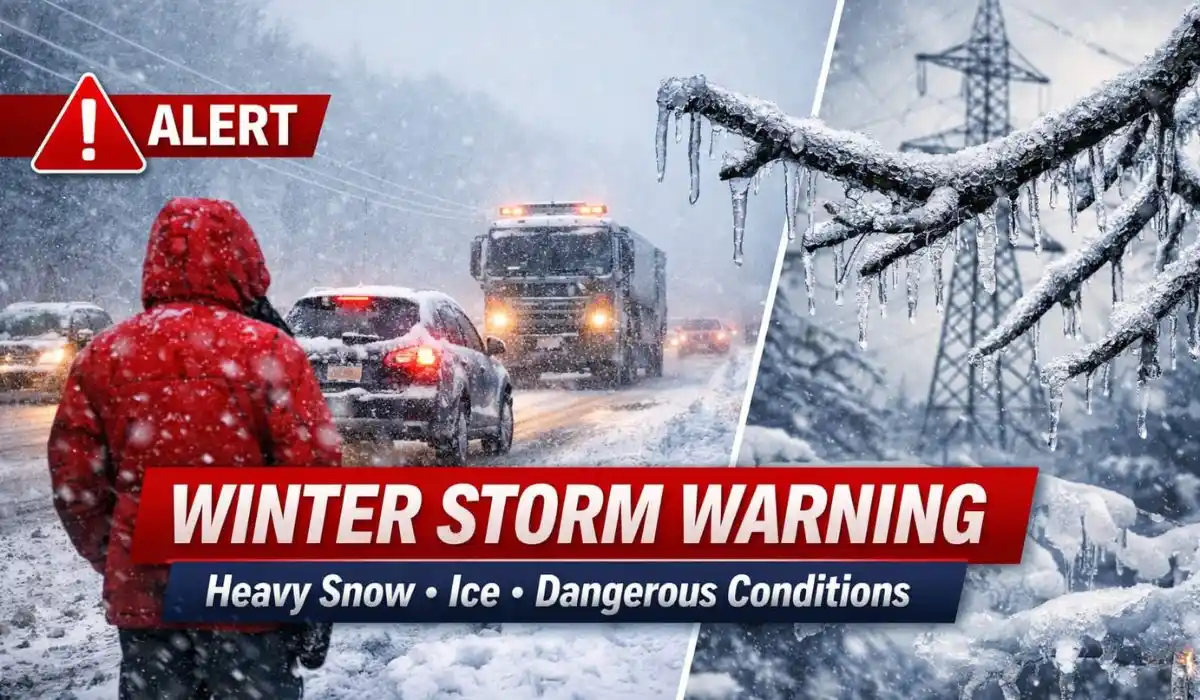
A Winter Storm Warning has been issued as severe winter weather threatens to impact large areas with heavy snowfall, ice accumulation, and dangerously low temperatures. Weather officials say the developing system has the potential to disrupt transportation, damage infrastructure, and pose serious safety risks, prompting authorities to urge residents to prepare immediately and stay alert as conditions rapidly deteriorate.
Meteorological agencies use a Winter Storm Warning to alert the public when severe winter weather is occurring or is imminent, posing a significant risk to life, property, and essential services. Such warnings are typically issued when a combination of heavy snowfall, freezing rain, sleet, and strong winds is expected to impact large areas.
According to standard forecasting criteria followed by leading weather authorities, a winter storm warning is declared when conditions are likely to cause hazardous travel, widespread disruptions, and potential power outages. These warnings are considered more urgent than advisories or watches and indicate that immediate precautions are necessary.
What Triggers a Winter Storm Warning
A winter storm warning is generally issued when one or more of the following conditions are forecast within a short time frame:
- Heavy snowfall, often exceeding 15 cm (6 inches) in 12–24 hours
- Freezing rain or sleet capable of creating ice accumulation on roads, trees, and power lines
- Strong winds, leading to blowing snow and near-whiteout conditions
- Prolonged sub-zero temperatures, increasing the risk of frostbite and hypothermia
These conditions can rapidly degrade road safety, reduce visibility, and overwhelm emergency services.
Impact on Daily Life and Infrastructure
Winter storms are known to disrupt transport networks, including highways, railways, and airports. Icy roads significantly increase accident risks, while snow accumulation can block rural routes and delay emergency response. Ice-laden power lines and falling tree branches often result in electricity and communication outages, sometimes lasting several days.
Public utilities, schools, and businesses may suspend operations to reduce risk, while hospitals and emergency services typically operate under heightened alert.
Safety Advisory for the Public
Weather experts advise residents in affected areas to:
- Avoid unnecessary travel during warning periods
- Keep emergency kits ready with food, water, medicines, and batteries
- Charge mobile devices and keep power backups if available
- Dress in insulated layers and limit exposure to extreme cold
- Monitor official weather bulletins and local authority updates
Elderly individuals, children, and those with medical conditions are considered especially vulnerable during severe winter events.

Understanding Weather Alerts
- Winter Storm Watch: Severe winter weather is possible within 24–48 hours
- Winter Storm Warning: Severe winter weather is occurring or imminent
Meteorologists stress that warnings should be taken seriously, as conditions can deteriorate faster than expected.
Expert Outlook
Climatologists note that winter storms are influenced by complex atmospheric patterns, including cold air masses, moisture systems, and jet stream behavior. Accurate forecasting and timely public response remain key to minimizing damage and safeguarding lives.
Authorities continue to urge citizens to rely only on official meteorological sources for updates and avoid spreading unverified information during severe weather events.
As the winter storm unfolds, officials continue to emphasize the importance of caution and preparedness to reduce risks to life and property. Residents are advised to closely monitor official weather updates, follow safety guidelines, and avoid unnecessary travel until conditions improve. Timely action and public awareness remain critical in minimizing the impact of severe winter weather events and ensuring community safety.